


- Home
- Companies
- Elvatech Ltd.
- Articles
- Battery Recycling Revolution: How XRF ...
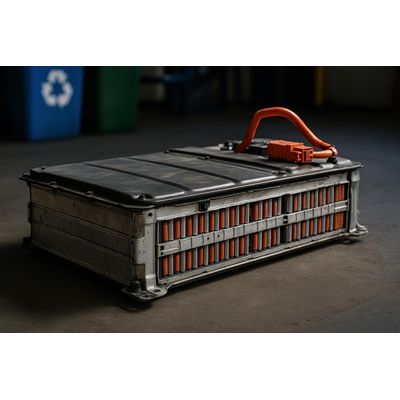
Battery Recycling Revolution: How XRF Analysis Maximizes Recovery from Lithium-Ion and Lead-Acid Batteries
The global electric vehicle fleet reached 40 million units in 2024. Each vehicle carries a battery pack weighing 400-900 pounds, containing lithium, cobalt, nickel, and manganese. Most packs were manufactured between 2018 and 2024 and have an expected lifespan of 8-15 years. Projections indicate a wave of end-of-life EV batteries entering recycling facilities starting in 2026, peaking around 2035. Analysts project up to 2 million metric tons of spent lithium-ion batteries annually by 2030, excluding consumer electronics, power tools, grid storage, e bikes, and the existing lead-acid battery market.
The recycling infrastructure is not lacking in processing capacity; hydrometallurgical and pyrometallurgical recovery technologies exist and scale. The bottleneck is sorting, because battery chemistry determines the viable recovery process, the materials recovered, and their value. An NMC battery from a Tesla contains cobalt worth about $30,000 per ton and nickel worth about $18,000 per ton, while an LFP battery from BYD contains iron worth roughly $500 per ton and no cobalt. Visually, these chemistries look identical, with black cathode powder and similar construction.
Current industry practice includes bulk mixed processing at average pricing or expensive lab analysis with a 3-5 day turnaround that throttles throughput. Neither approach scales. XRF analysis changes the economics: test cathode material in 3-10 seconds, identify cobalt, nickel, iron, manganese, and phosphorus, and route accordingly. Facilities implementing XRF-based sorting can realize 30-60% higher revenue from identical battery volumes.
The Battery Chemistry Puzzle: Why Identification Matters
- NMC (Nickel Manganese Cobalt) dominates the EV market and yields the highest recycling value. Cathode composition: LiNiMnCoO2 with varying ratios (NMC 532, 622, 811). Cobalt content ranges 12-20%, nickel 10-35%, manganese 10-20%. Recovery value: $4,500-$6,500/ton. Found in Tesla Model S/X (older vehicles), GM Bolt, BMW i3, and premium power tools.
- LFP (Lithium Iron Phosphate) is gaining share, especially in commercial vehicles. Cathode composition: LiFePO4 — zero cobalt, zero nickel. Recovery value: $2,200-$3,200/ton. Found in Tesla Model 3 Standard Range, BYD vehicles, electric buses, grid storage.
- NCA (Nickel Cobalt Aluminum) sits at the premium end with very high nickel content. Recovery value: $5,500-$7,000/ton. Found in Tesla Model 3/Y Long Range and high-performance laptops.
The Value Gradient (current metal prices as of March 2026):
- Cobalt $30,000/ton
- Nickel $18,000/ton
- Lithium carbonate $15,000/ton
- Iron $500/ton
A ton of NMC 622 batteries contains roughly 60 kg cobalt ($1,800), 45 kg nickel ($810), and 21 kg lithium ($315), plus copper, aluminum, and steel. Total recoverable value: $4,500-$5,500/ton.
A ton of LFP batteries contains 21 kg lithium ($315), iron and phosphorus with minimal value, plus base metals. Total recoverable value: $2,200-$2,800/ton.
Selling NMC at LFP pricing results in a substantial loss (~$2,500-$3,000 per ton). For facilities processing 100 tons per month, mispricing can erase significant profitability.
Lead-Acid Batteries contain 60-70% lead by weight. Lead priced at roughly $1.00-1.20 per pound yields about $2,000-$2,400/ton. Lead-acid processing is completely incompatible with lithium-ion, requiring different chemistry, equipment, and safety protocols.
The challenge is that external battery markings are minimal. Opened packs reveal identical-looking cathode powder across chemistries, making visual identification unreliable.
How XRF Identifies Battery Chemistry in Seconds
XRF measures the elemental composition of the cathode material directly, the component that defines battery type and value. XRF analyzers detect elements from sodium (Na) to uranium (U), covering cobalt, nickel, manganese, iron, phosphorus, and aluminum.
Testing process:
- Batteries arrive as complete packs, modules, or cells. Access to cathode material requires exposing it by drilling or cutting, with safety protocols discharging to <30V before mechanical access.
- Position the XRF analyzer against the cathode material and run the test. Results appear in 3-10 seconds.
- Example readings:
- NMC battery reading: Co 18%, Ni 15%, Mn 12%, O 52%
- LFP battery reading: Fe 35%, P 18%, O 45%, Co 0%, Ni 0%
- NCA battery reading: Ni 32%, Co 8%, Al 2%, O 56%
The readings for cobalt, nickel, iron, and phosphorus immediately identify the chemistry. High cobalt with moderate nickel indicates NMC; very high nickel with low cobalt indicates NCA; zero cobalt with high iron and phosphorus indicates LFP. The analyzer performs the identification; the operator uses the result to sort.
Analysis Modes
- Quick scan 1-3 seconds for sorting, enabling 100+ batteries per hour. Sufficient for high-volume sorting when the goal is to distinguish NMC vs LFP vs NCA.
- Precise mode 5-10 seconds for accurate percentages, used for batch verification and pricing negotiations.
- Premium analyzers such as the Elvatech ProSpector 3 Max deliver high accuracy in 5-10 seconds, enabling detailed composition without slowing throughput.
Why XRF Works for Battery Sorting
- Battery chemistry identification relies on marker elements rather than detecting every constituent. Cobalt, nickel, iron, manganese, and phosphorus are heavy enough for standard XRF detection and definitively identify the chemistry. Lithium is present in all Li-ion chemistries, so detecting lithium does not distinguish NMC, NCA, or LFP.
- Methods comparison (speed, chemistry ID, cost, drawbacks):
- Visual inspection: 10 sec, unreliable, $0, cannot distinguish chemistries
- Weight/dimensions: 30 sec, unreliable, $0, chemistry overlap
- Open-circuit voltage: 2 min, moderate, $50, degrades with battery age
- ICP-MS lab analysis: 2-5 days, excellent, $150/sample, throughput too slow
- XRF analysis: 3-10 sec, excellent, $2-3/test, requires cathode access
Lead-Acid Detection: XRF immediately flags lead-acid batteries mixed with lithium-ion streams. Lead content of 60-70% prompts segregation to lead recycling channels to prevent contamination of lithium-ion processing.
Where High-Value Batteries Concentrate
Electric Vehicle Batteries
EV packs weigh 400-1,000 pounds and contain hundreds of cells. A Tesla Model S pack is roughly 540 kg and contains NMC chemistry worth about $2,400-$3,000 in recoverable materials. Model 3 Long Range packs (NCA) are worth about $2,500-$3,500, while Model 3 Standard Range (LFP) falls to $1,200-$1,700. Early EVs (2010-2015) used NMC, mid-generation (2016-2020) used NMC or NCA, and 2021 onward shows increasing LFP adoption in standard-range and commercial vehicles. Sorting is essential to avoid undervaluing high cobalt content materials.
Power Tool Batteries
Premium power tool batteries typically use NMC or NCA for power density. Packs weigh 1-2 pounds and contain 5-15 cells. Volume is substantial across construction, rental, and maintenance operations, with NMC typically present due to its cobalt content and high discharge requirements.
Consumer Electronics
Laptop and tablet batteries have used NMC or NCA through 2023, with newer budget devices increasingly using LFP to reduce cost. A laptop pack weighs 200-400 grams. Enterprise IT refresh cycles generate significant volumes; premium laptops show NMC or NCA, while budget devices may be LFP.
Grid Storage Systems
Grid storage systems almost exclusively use LFP for safety and cycle life. Large installations may house 50-200 tons of batteries, creating substantial volumes where LFP value is lower per ton but overall material flow is massive.
Setting Up XRF Based Battery Sorting
Equipment Needed
- XRF Analyzer 20,000-35,000; entry level ProSpector 2 or ProSpector 3 base versions (20,000-25,000) handle chemistry identification; ProSpector 3 Advanced (25,000-35,000) offers faster analysis and better data management; ProSpector 3 Max (35,000-50,000) with helium purge detects lighter elements for detailed component analysis but is not required for basic sorting.
- Battery Discharge Equipment 2,000-10,000; safety before handling
- Cathode Access Tools 500-3,000; drill press or cutting systems; automated disassembly for high volumes
- Sorting Containers 3,000-10,000; segregated, fire-rated bins labeled by chemistry
Workflow Integration
- During disassembly, when cathode material is accessible, test with XRF (3-5 seconds per battery using quick scan). Sort immediately into designated bins. For large EV packs, testing 5-10 representative cells identifies the pack chemistry.
- Before shipping to processors, apply precise XRF mode (5-10 seconds per test) on representative samples from each batch to verify chemistry consistency and average composition. Use results to support pricing negotiations.
- Staffing: One operator can test 100-200 batteries per hour with quick scan. For facilities processing 500-1,000 batteries weekly, 5-10 hours of XRF testing per week suffices for complete chemistry sorting.
ROI: When Battery Chemistry Testing Pays Off
Scenario: Processing 100 tons of mixed lithium ion batteries per month. Current practice yields bulk mixed revenue of $3,500 per ton ($350,000 per month). Investment required for XRF plus discharge and tools is $28,000.
After Implementing XRF Sorting (typical 2024-2026 battery stream):
- 45 tons NMC (EVs, power tools): $5,500/ton = $247,500
- 35 tons LFP (commercial EVs, storage): $2,800/ton = $98,000
- 15 tons NCA (Tesla Long Range): $6,200/ton = $93,000
- 5 tons other chemistries: $2,200/ton = $11,000
Total revenue = $449,500 (vs $350,000 bulk). Improvement = $99,500 per month = $1,194,000 per year.
Operating costs (operator time 40 h/mo at $25/h, $1,000; maintenance $300; consumables $100) = $1,400/mo. Net monthly gain = $98,100. Payback period = $28,000 / $98,100 ˜ 0.3 months (about 10 days). After payback, annual incremental revenue on the same material volumes is about $1.18 million.
Compounding Benefits: facilities that test and pay accurate prices attract higher quality feedstock. EV dealerships and fleet operators direct material to sites that recognize high cobalt NMC chemistry, rather than underpaying bulk processors. This improves feedstock quality and processor confidence, enabling premium pricing for cobalt-rich material.
Common Mistakes Recyclers Make
- Mistake 1: Assuming all lithium-ion batteries are equally valuable. Solution: Test everything as LFP share increases; pricing varies by chemistry and year.
- Mistake 2: Testing battery casings instead of cathodes. Solution: Disassemble to access cathode; 30-60 seconds of extra work yields material-identifying data.
- Mistake 3: Mixing lead-acid into lithium-ion streams. Solution: XRF instantly identifies lead content (60-70%); segregate to lead recycling channels.
- Mistake 4: Accepting supplier claims without verification. Solution: Test random samples; three-second scans on 10-20 batteries take minutes and prevent overpayment.
- Mistake 5: Not building a chemistry database. Solution: Log XRF results by source model and year to support faster pre-sorting of known units and reserve testing for unknowns.
Choosing the Right XRF Analyzer
Key features for battery applications
- Element detection range: Chemistry identification relies on cobalt, nickel, iron, manganese, and phosphorus. All XRF devices detect these elements within the Na to U range. Entry-level devices are sufficient for basic sorting.
- Analysis speed: Quick scan 1-3 seconds; precise 5-10 seconds. Throughput is driven by speed; longer analyzers hinder high-volume sorting.
- Data management: Built-in memory and the ability to export data and build chemistry databases by source or batch.
- Durability: Equipment must withstand electrolyte residues, dust, and occasional thermal events; IP54+ protection and rugged housings are desirable.
Budget guide (price ranges reflect base models and options):
- Entry-level 20K-25K; detection Na through U; ideal for basic sorting of Co, Ni, Fe, Mn, P
- Mid-range 25K-35K; faster analysis; suitable for most high-volume operations
- Premium (He purge) 35K-50K; detects lighter elements for component analysis and aluminum alloy verification; not required for basic chemistry sorting
For battery recycling operations, entry to mid-range analyzers such as ProSpector 2 or ProSpector 3 base versions provide all essential capabilities. Premium helium purge systems enable additional component analysis but are not required for chemistry-based sorting.
FAQ: XRF for Battery Recycling
Can XRF identify battery chemistry accurately? Yes. XRF detects cobalt, nickel, iron, manganese, and phosphorus with approximately ±5-10% accuracy. NMC batteries typically show cobalt in the 12-20% range with nickel presence; LFP shows zero cobalt with higher iron and phosphorus; NCA shows high nickel with minimal cobalt. The elemental differences are sufficient for definitive chemistry identification.
Does XRF detect all elements in batteries? XRF detects elements from sodium to uranium. This covers cobalt, nickel, iron, manganese, phosphorus, aluminum, copper, and other structural metals. Lithium is too light for reliable detection and is not needed to distinguish chemistries.
How fast can I test batteries? Quick scan 1-3 seconds per battery, enabling 100-150 tests per hour by a single operator. For large packs, testing 5 representative cells per pack can identify pack chemistry for 200-400 cell configurations.
Do I need to fully disassemble batteries? No. Access to cathode material inside cells suffices. For large packs, opening the pack exterior and testing representative internal cells identifies chemistry with minimal disassembly. Full disassembly is only required when material separation and shipping demand it.
What about safety during testing? Discharge to safe voltages (<30 V for lithium ion, <3 V for lead-acid) before handling. XRF testing itself does not generate heat or sparks; standard safety protocols apply during disassembly and handling.
Conclusion: Sorting Determines Profitability
The battery recycling industry is scaling from roughly 100,000 tons per year to about 2 million tons by 2030. Processing capacity is expanding globally through new hydrometallurgical and pyrometallurgical facilities, but the limiting factor is knowledge of what the material contains. An NMC battery is worth about $5,500 per ton, while an LFP battery is worth about $2,800 per ton, even when they look identical. Proper chemistry identification dictates recovery processes, material yields, and pricing. Facilities that identify chemistry accurately route material correctly and negotiate specialized pricing, capturing maximum value. Those that process bulk mixed material miss out on substantial potential revenue.
The numbers are compelling:
- 100 tons per month operation can deliver about an additional $1.19 million in annual profit
- Equipment investment around $28,000
- Payback in roughly 10 days
- Ongoing revenue uplift of approximately 28% on identical volume
XRF analysis offers a scalable solution for high throughput battery chemistry identification with rapid, definitive results and real-time sorting decisions. Early adoption supports market share capture as the industry scales. For implementation discussions and demonstrations of XRF capabilities for battery recycling, consider evaluating the ProSpector 2 or ProSpector 3 base models for fast, accurate chemistry identification across lithium-ion and lead-acid batteries. Schedule a demonstration to see how XRF can shift battery recycling from bulk processing to precision material recovery.
Original: https://elvatech.com/battery-recycling-revolution-how-xrf-analysis-maximizes-recovery-from-lithium-ion-and-lead-acid-batteries/