


Energy resilience: A wood-stove worldview
There’s a quiet storm brewing in how we think about energy. Not the poetic kind, but the kind that leaves tens of thousands of people cold, in the dark, and scrambling for heat when the grid fails.
The recent incident in Berlin made this painfully clear. In early January, an arson attack on major power cables triggered one of the longest blackouts the city has experienced since World War II. Around 45,000 homes and thousands of businesses were left without electricity and, crucially, without heating during freezing winter conditions. For days, people relied on emergency shelters, candles, and borrowed solutions, all because a single, centralised system failed at a single point.
This wasn’t a technological curiosity or a ‘black swan’ event. It was a real-world demonstration of how vulnerable modern societies can be when they rely too heavily on one energy source and one delivery system. When electricity goes down in a highly electrified heating system, warmth disappears with it. Lights, communication, and safety follow soon after.
One cable cut, a city goes cold
The lesson from Berlin is uncomfortable but clear: relying on a single energy source is not just inefficient or risky, it can be genuinely dangerous. Modern grids are impressive feats of engineering, but they are also complex and fragile. A storm, a technical failure, or deliberate sabotage can ripple outward and affect entire neighbourhoods or cities in a matter of minutes.
This is not a uniquely German problem. In the UK, recent warnings suggest the country could face electricity rationing in the coming years due to pressure on ageing gas-fired power stations and an increasingly strained grid. Once again, the issue is not a lack of technology, but an over-reliance on a narrow set of solutions. When systems lack diversity and redundancy, they fail harder and faster.
Why people don’t trust “all-electric” promises
This is where the conversation around wood stoves deserves a more honest and less ideological tone. At Whitebeam, we are not anti-technology. We believe deeply in innovation, efficiency, and cleaner energy. But resilience matters just as much as progress, and resilience comes from having options.
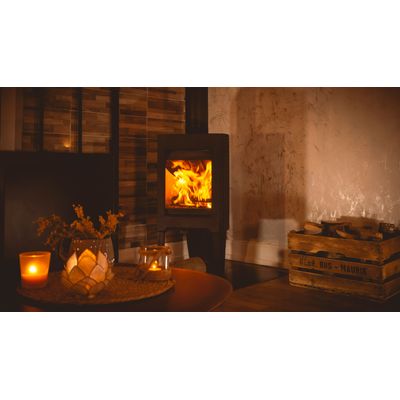
A wood stove is not a rejection of modern life. It is a practical acknowledgement that systems can fail. When the grid goes down, a wood stove does not ask for software updates, signal strength, or external power. It simply works. That simplicity is not backward; it is robust.
It’s also important to recognise that you can’t blame people for wanting wood stoves, or for being suspicious of solutions that are highly technical, tightly regulated, and entirely dependent on distant infrastructure. That suspicion isn’t ignorance. It’s experience. People have lived through blackouts, fuel shortages, and sudden rule changes. They know that when everything depends on one system, they are exposed when that system falters.
Wood stoves offer something increasingly rare: autonomy. They provide heat independently of the grid, using a fuel source that can be stored locally and managed by the household itself. In a broader strategy that includes renewables, efficient electric systems, and smart infrastructure, wood stoves act as a form of insurance. They don’t replace modern energy solutions; they complement them.
The limits on harmful emissions from woodstoves are being tightened all the time, which often means installing new components. Some of these, such as motorised air valves and electrostatic precipitators, require an electrical power supply but what happens when there is a power cut ? Does the wood stove still work ? Some of the people who advocate these technologies would prefer the answer to be ‘no’, otherwise they are worried that owners will simply unplug them.
The news from Britain only reinforces this point. When national discussions turn to the possibility of electricity rationing, it becomes obvious that a future built on a single dominant energy source is a fragile one. Diversity in heating is not nostalgia. It is preparedness.
Energy security is not about choosing one perfect answer. It is about acknowledging uncertainty and planning for it. Sometimes, the technologies that have endured the longest are the ones that still have something vital to offer.
And in a world where the lights can go out overnight, having a fire that still burns is not a step backward. It is common sense.