


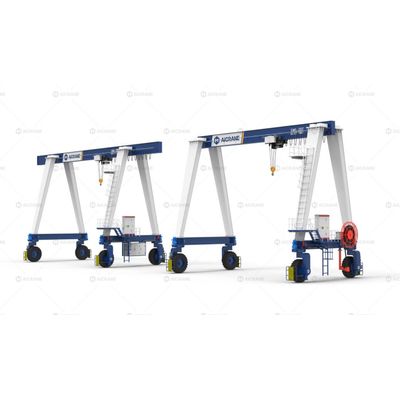
Rubber Tyred Gantry Crane Design for Diesel Generator vs Electric Power Environments
Rubber Tyred Gantry (RTG) cranes are indispensable in container terminals, logistics hubs, and intermodal yards. They are designed for heavy-duty container handling and efficient stacking, capable of lifting loads ranging from 20 tons to over 100 tons. One of the most critical factors in RTG crane design is the choice of power source. Traditionally, RTG cranes have operated on diesel generators, but the trend is shifting toward electric power, especially in environmentally conscious ports. The choice between diesel and electric power profoundly affects crane design, operational efficiency, environmental impact, and long-term maintenance requirements. This article explores the design considerations for RTG cranes in both diesel generator and electric power environments.
Diesel-Powered RTG Cranes
Advantages of Diesel Power
Diesel-powered RTG cranes have been the standard in many container terminals due to their mobility and independence from fixed electrical infrastructure. These cranes typically include onboard diesel engines coupled with generators that produce electricity for the hoist, trolley, and travel motors. Key advantages include:
- Operational Independence: Diesel RTGs do not rely on a fixed power supply, allowing them to operate in terminals without overhead electrification or underdeveloped power grids.
- Mobility: They can be quickly redeployed without major modifications to the site infrastructure.
- High Torque Output: Diesel engines provide consistent power suitable for lifting heavy containers at variable speeds.
Design Considerations for Diesel RTGs
Diesel RTG design requires careful attention to several components:
- Engine and Generator Sizing: The diesel engine must be capable of supplying sufficient power for simultaneous hoisting, trolley movement, and crane travel. Oversized engines lead to fuel inefficiency, while undersized engines may reduce lifting performance.
- Fuel System and Tank Design: The crane must store adequate diesel fuel for extended operation. Tank placement affects the crane's center of gravity, which in turn impacts stability.
- Cooling Systems: Diesel engines generate significant heat, requiring robust cooling solutions to prevent overheating, especially in hot climates.
- Vibration and Noise Control: Diesel engines produce vibration and noise that can affect mobile gantry crane structural integrity and operator comfort. Designers often incorporate vibration dampers, engine mounts, and acoustic enclosures.
- Emission Management: Modern diesel RTGs must comply with emission regulations, which may require exhaust treatment systems like selective catalytic reduction (SCR) or particulate filters.
Operational Challenges
While diesel RTGs offer flexibility, they face operational challenges:
- Fuel Costs: Diesel fuel represents a significant operational cost, especially in high-intensity terminals.
- Environmental Impact: Diesel RTGs contribute to air pollution and greenhouse gas emissions, making them less desirable in environmentally regulated regions.
- Maintenance Requirements: Diesel engines require regular maintenance, including oil changes, filter replacements, and injector servicing. Generator sets also need periodic checks to ensure consistent performance.
Electric-Powered RTG Cranes
Advantages of Electric Power
Electric RTGs are becoming increasingly popular due to environmental regulations, lower operational costs, and efficiency gains. Electric RTGs can draw power from shore-based substations via cable reels or busbars, or operate as hybrid systems with onboard batteries or supercapacitors. The main advantages include:
- Environmental Sustainability: Electric RTGs produce zero on-site emissions, helping terminals meet stringent environmental standards.
- Lower Operating Costs: Electricity is generally cheaper than diesel fuel, and electric motors require less maintenance than internal combustion engines.
- Regenerative Braking: Electric systems allow energy recovery during container lowering or crane deceleration, reducing overall energy consumption.
- Precise Control: Electric motors provide smoother and more precise motion control, improving container stacking accuracy and reducing mechanical stress on the crane structure.
Design Considerations for Electric RTGs
Electric RTG design involves different engineering priorities compared to diesel RTGs:
- Power Distribution: For cable-connected systems, crane design must incorporate cable management systems, such as festoon or conductor bar arrangements. Proper cable tensioning and reel mechanisms prevent wear and accidental disconnections.
- Energy Storage: Hybrid electric RTGs may include battery banks or supercapacitors to reduce peak power draw and improve operational flexibility. Battery placement affects the crane’s center of gravity and structural load distribution.
- Electrical Components: Designers must select motors, inverters, and transformers capable of handling high starting currents and regenerative power. Cooling systems are necessary for electronic components to prevent overheating.
- Structural Design: Electric RTGs often have lighter onboard equipment than diesel RTGs, potentially allowing for optimized structural design and reduced crane weight without compromising stability.
- Safety Systems: Electric RTGs require reliable grounding, short-circuit protection, and surge protection to safeguard operators and equipment against electrical faults.
Operational Challenges
While electric RTGs are efficient and environmentally friendly, they have specific challenges:
- Infrastructure Dependency: Electric RTGs require robust electrical infrastructure, which may involve high initial investment in substations, cables, or busbars.
- Limited Mobility: While hybrid systems improve mobility, fully cable-connected electric RTGs are constrained to operating areas within reach of the power supply.
- Battery Management: Hybrid electric RTGs require careful battery management to ensure consistent performance and longevity, including charging protocols and temperature control.
Comparative Analysis: Diesel vs Electric RTGs
When comparing diesel and electric RTG cranes, several key differences emerge. Diesel RTGs are highly mobile and independent of infrastructure, making them suitable for terminals without reliable electricity access or in regions with underdeveloped power grids. They provide high torque and can handle heavy loads continuously, but at the cost of higher fuel consumption, greater emissions, and more intensive maintenance requirements.
In contrast, electric RTGs excel in operational efficiency and environmental performance. They allow precise motion control and benefit from regenerative braking, reducing energy consumption. Operating costs are generally lower due to cheaper electricity and reduced maintenance, as electric motors are simpler than diesel engines. However, electric RTGs are more dependent on infrastructure, requiring substations, cabling, or battery systems, which can limit mobility. Hybrid electric RTGs attempt to balance these factors, offering both environmental benefits and some operational flexibility.
Ultimately, the choice between diesel and electric RTG cranes depends on terminal priorities, including operational mobility, environmental regulations, energy costs, and long-term maintenance considerations.
Design Implications for Terminal Planning
The selection of diesel or electric RTG cranes has broader implications for terminal design:
- Fuel Storage vs Electrical Infrastructure: Diesel RTGs require onsite fuel storage with safety considerations, whereas electric RTGs necessitate robust electrical distribution networks.
- Crane Spacing and Stacking Patterns: Electric RTGs with cable constraints must be planned around cable reach or battery range, affecting crane layout and container stacking strategy.
- Maintenance Facilities: Diesel RTGs require engine servicing bays, whereas electric RTGs need facilities for battery inspection, inverter servicing, and electrical safety checks.
- Environmental Regulations: Ports in regions with strict emissions policies may be required to adopt electric or hybrid RTGs, affecting terminal planning and investment.
Trends in RTG Crane Design
Recent trends indicate a clear shift toward hybrid and fully electric RTG cranes:
- Hybrid RTGs: Combine diesel generators with battery systems to optimize fuel consumption, reduce emissions, and improve energy efficiency.
- Fully Electric RTGs: Leveraging grid power and advanced energy storage to minimize environmental impact and operational costs.
- Smart Control Systems: Advanced automation and AI-enabled crane control help manage energy consumption, optimize stacking operations, and reduce mechanical wear.
RTG rubber tyred gantry crane manufacturers now prioritize modular designs, allowing terminals to upgrade diesel RTGs to hybrid or electric power systems in response to evolving environmental and economic requirements.
Conclusion
The choice between diesel and electric power environments significantly influences the design of Rubber Tyred Gantry cranes. Diesel RTGs offer operational independence and mobility but come with higher emissions and fuel costs. Electric RTGs provide environmental benefits, operational efficiency, and precise control but require substantial infrastructure investment. Designers and terminal operators must consider operational needs, environmental regulations, energy costs, and maintenance implications when selecting the appropriate power system.
As container handling demands grow and ports increasingly focus on sustainability, electric and hybrid RTG designs are becoming the standard. Forward-looking terminals can achieve optimized performance, reduced emissions, and lower lifecycle costs by carefully balancing power source selection with crane design considerations.