


SIMS Surface Analysis for Battery Cathode-Electrolyte Interfaces: Depth Profiling of SEI Composition
The stability and lifetime of lithium-ion batteries hinges on deciphering the reactive processes that occur where the cathode meets the electrolyte. During cycling, electrolyte components oxidise at the cathode-electrolyte interface and form a thin, reactive interphase. This layer is commonly known as the solid electrolyte interphase (SEI), or more specifically as the cathode-electrolyte interphase (CEI) when formed on cathodes. Although the SEI is crucial for stabilising the cathode-electrolyte interface, it is only a few nanometres thick and chemically varied, which complicates its analysis with conventional analytical techniques like X-ray Photoelectron Spectroscopy (XPS) or Raman spectroscopy.
Secondary Ion Mass Spectrometry (SIMS) surface analysis is a powerful method that can be used to investigate both the surface chemistry and depth-dependent structure of the SEI. Possessing the sensitivity to detect both elemental species and complex molecular fragments, SIMS surface analysis is uniquely positioned to characterise interphase formation at battery cathode-electrolyte interfaces, offering insight into the chemical pathways that govern SEI and CEI development.
Chemical Origin of the Interphase
At the battery cathode-electrolyte interface, the SEI/CEI develops through a series of electrolyte decomposition reactions that progress during cycling. The key pathways responsible for generating the interphase include the:
- Oxidation of electrolyte solvents- producing organic fragments and polymeric species that contribute to the outer regions of the interphase.
- Decomposition of lithium salts- yielding lithium fluoride, fluorophosphates, and other phosphate-containing species that accumulate within the inorganic-rich domains.
- Reactions between electrolyte components and the cathode surface- generating metal oxides and metal fluorides that form closest to the cathode.
The interplay of these reactions generates a layered, chemically diverse interphase, representing the cathode-specific form of the SEI, whose composition evolves with voltage, temperature, and cycling history during battery operation.
Layered Nature of the Interphase
Driven by competing reaction pathways, the SEI that forms at the battery cathode-electrolyte interface develops with a layered structure. It is not uniform; instead its layered arrangement typically places organic fragments in the outermost region, salt-derived inorganic species within the the intermediate domain, and metal-containing compounds closest to the cathode surface. As this structure varies over only a few nanometres, effective characterisation requires surface sensitivity and controlled depth profiling, capabilities that can be achieved using SIMS surface analysis in battery research.
SIMS surface analysis can characterise the SEI at the battery cathode-electrolyte interface with high chemical and spatial resolution. This technique operates by directing a focused primary ion beam onto the sample’s surface, sputtering away material and releasing secondary ions for mass analysis. The resulting spectra reveal elemental species and molecular fragments that reflect the composition and evolution of the interphase during battery operation.
SIMS surface analysis is particularly valuable for studying the battery cathode-electrolyte interface because it:
- Detects a broad range of molecular fragments and elemental species, capturing the chemical diversity of SEI components
- Offers high sensitivity, enabling the identification of both dominant and trace decomposition products
- Analyses the upper most nanometres of the surface, precisely where SEI formation and early-stage modifications occur in battery systems.
Chemical and Spatial Insight
Another capability of SIMS surface analysis is that it can generate chemical images that show how SEI species are distributed across the battery cathode-electrolyte interface. These lateral variations may indicate local reaction environments, degradation pathways, or structural heterogeneity within the electrode. By combining depth-resolved chemistry with spatial mapping, SIMS surface analysis delivers a detailed view on how the SEI forms, evolves, and influences cathode behaviour throughout battery cycling.
SIMS surface analysis can look beyond the SEI surface and examine how its chemistry changes with depth at battery cathode-electrolyte interfaces. The information ascertained from depth profiling can help clarify how different SEI components are distributed through the interphase.
How Depth Profiling Works
Depth profiling with SIMS surface analysis involves gradually sputtering the SEI and measuring the secondary ions released as each layer is removed. Tracking changes in ion intensities as a function of sputter time can produce a depth-resolved profile that reveals how chemical species are arranged throughout the interface.
What Depth Profiling Reveals
Applying depth profiling to battery cathode-electrolyte interfaces with SIMS surface analysis can show the composition of the SEI changes as a function of depth. SIMS surface analysis helps distinguish which species appear only at the surface, which are present throughout the interphase, and which accumulate close to the cathode. It also highlights how these distributions shift with battery cycling, electrolyte formulation, or operating conditions.
The capabilities of depth profiling can be used to reveal:
- Where different SEI components reside within the interphase
- How the balance or organic and inorganic species changes with depth
- Whether certain products accumulate preferentially near the cathode
- How the internal structure of the SEI evolves during cycling.
Such insights show not only how the SEI is arranged, but how its internal chemistry changes in response to real battery operating environments.
Interpreting Depth-Resolved Data
Depth-resolved measurements from SIMS surface analysis can be shaped through factors such as variable sputter rates and ion yields within the SEI. Considering them helps ensure depth-dependent trends are interpreted reliably and that any artefacts affecting the apparent interphase structure are recognised.
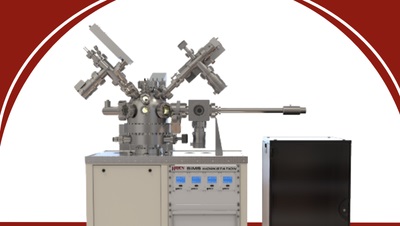
Hiden Analytical offers instrumentation that can be used to characterise the SEI at battery cathode-electrolyte interfaces with accuracy and depth. Our SIMS Workstation and Hi5 SIMS Workstation provide high-resolution imaging and compositional profiling, supporting studies of interphase structure and development. Modular SIMS components are also available for laboratories seeking to enhance existing surface analysis systems. For guidance on selecting the most suitable SIMS solution for your battery research, connect with our team today.