


- Home
- Companies
- Barysol GmbH
- Products
Barysol GmbH products
Solar Technology - Photovoltaics
Barysol - Photovoltaics Solar cells
Solar cells are the key components and the smallest units of a photovoltaic system. Combined to form solar modules, arrays or panels, they capture the solar radiation that impacts them. Direct current is generated between the upper and lower surfaces of the cells.
Solar Technology - Solar Modules
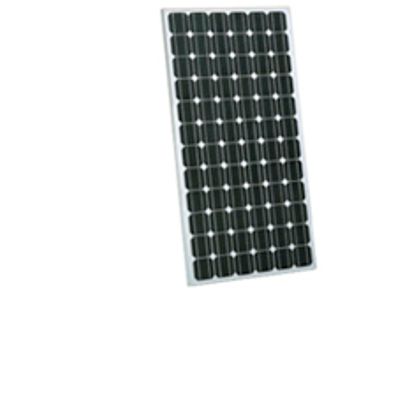
Barysol - Monocrystalline Modules
Whenever only a small amount of space is available, use is generally made of monocrystalline modules. Because the silicon content of the cells is purer, their efficiency is particularly high. Around 15 % less surface area is needed than with other modules for the same output. The cell voltage is normally also slightly higher. Monocrystalline modules currently have a life expectancy of over 30 years, with the manufacturers giving a performance guarantee of over 20 years. The cells of monocrystalline modules are generally black.
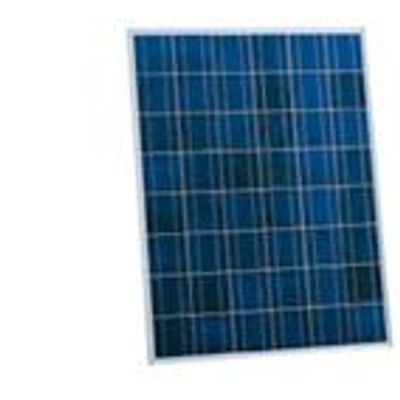
Barysol - Polycrystalline Modules
Polycrystalline modules have a somewhat lower silicon content, but are more environmentally friendly to manufacture. They therefore have a lower level of efficiency and need a greater surface area for the same output. Because the price per Watt often turns out lower, they are nevertheless frequently used for large installations. In terms of their service life and reliability, polycrystalline modules are in no way inferior to the others. The cells generally have a bluish colour with a glittery effect.
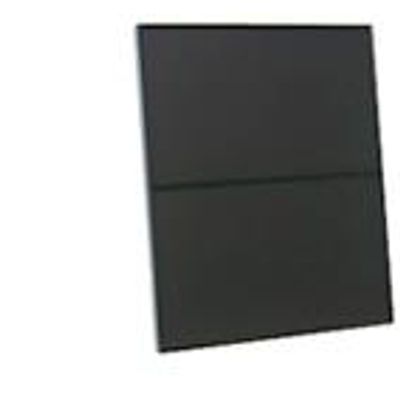
Barysol - Solar Modules
Various chemical elements are used in the production of amorphous modules. The original output decreases heavily in the first 1,000 hours of service, but this degradation has already been taken into account in their manufacture, which is why amorphous modules have a higher output when first delivered. After the initial aging period, the output remains stable. Thanks to the new thin-layer technology, amorphous modules can nowadays be manufactured extremely cheaply and in an environmentally friendly manner.
Solar Technology - DC to AC Inverters
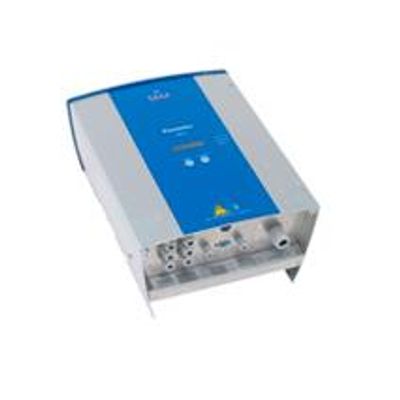
Barysol - String Inverters
String inverters are the most commonly used inverters in photovoltaics and are noted for their excellent value for money. They have higher voltages than module inverters and also have slightly higher losses.
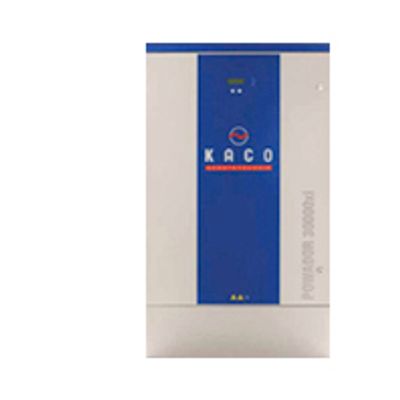
Barysol - Central Inverters
Central inverters are large inverters that are usually accommodated in a room of their own. The efficiency of these units is particularly high, but they need plenty of room and are relatively expensive, which is why they are generally only used for large photovoltaic installations.
Solar Technology - Grid-Connected Unit
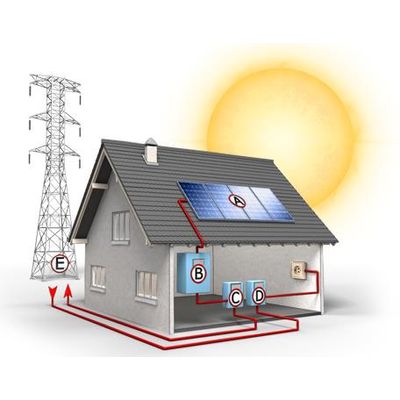
Barysol - Grid-Connected Unit
The most simple and most economical way of using the electricity from a photovoltaic installation is through a grid-connected system. The direct current generated by the modules is transformed by the inverter into 230 V alternating current and fed entirely into the public grid. The energy needed for the house is then purchased as before from the selected energy provider.Depending on the type of module, inverter combination, location and angle of incidence, a 1.0 KWp unit in Germany will generate between 650 and 1,150 kWh electricity a year. Through the reimbursement for the electricity fed in to the grid, plus the depreciation benefits and possible additional subsidies, you not only generate truly clean electricity you also get your investment back again over the course of the years, and then actually make a profit.
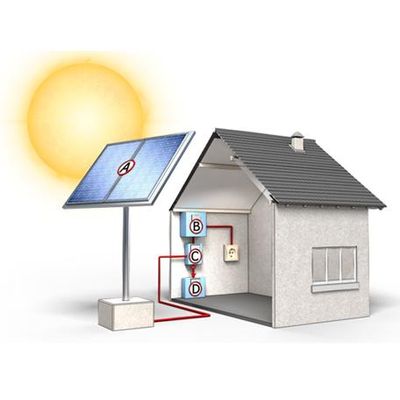
Barysol - These Self-Supporting Stand Alone Insular Unit
These self-supporting units (sometimes described as "autarkic" in technical circles) are primarily found on objects that do not have any access to electricity from the mains, e.g. on camping sites or summer houses in gardens. In such cases, the operator`s prime objective is to have his or her own power source. With the aid of storage batteries, insular solutions offer the possibility of being independent of the mains. Because of the instant reimbursement for the electricity fed into the system, which is currently much higher than the normal purchase price, however, there is little point in storing the generated energy and using it when needed. An insular installation of this kind is therefore really only worthwhile for objects that are not connected to the public power grid.