


Cubic Sensor and Instrument Co., Ltd articles
In recent years, concerns over indoor air pollution have intensified as people spend a significant portion of their daily lives indoors. In crowded indoor environments, high occupant density often causes CO2 levels to rise beyond optimal thresholds, which can adversely impact comfort and well-being. In addition, interior decoration or furnishing materials may release formaldehyde (HCHO) and volatile organic compounds (VOCs), alongside other pollutants such as particulate matter (PM) that can
Cubic Sensor and Instrument Co.,Ltd.

Thermal runaway is one of the most critical safety risks associated with lithium-ion batteries used in electric vehicles (EVs). Once initiated, it can quickly escalate into fires or explosions, endangering both vehicle occupants and surrounding property. Recognizing the severe hazard, the U.S. National Highway Traffic Safety Administration (NHTSA) issued final rule of
Cubic Sensor and Instrument Co.,Ltd.
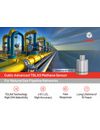
Methane leakage poses a significant safety risk in the operation of natural gas transmission and distribution systems, especially at critical points including pressure regulating stations, valve chambers, and metering stations. In the event of methane leak, there is a high potential risk of explosion, threatening personnel safety, equipment integrity, and the surrounding environment.
In order to achieve earlier and more reliable methane leakage warning, Cubic, a leading manufacturer of
Cubic Sensor and Instrument Co.,Ltd.
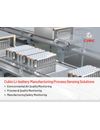
The manufacturing of lithium-ion batteries requires a highly controlled environment, stringent safety protocols, and robust quality assurance mechanisms throughout every stage of production.
The process is typically divided into five core steps:
- Step 1: Material Preparation
- Step 2: Electrode Manufacturing
- Step 3: Cell Assembly
- Step 4: Formation & Aging
- Step 5: Final Testing
At each of these stages, t
Cubic Sensor and Instrument Co.,Ltd.
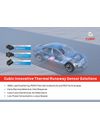
In the production and application of lithium batteries, thermal runaway is a critical safety concern. Thermal runaway is a phenomenon in which the internal temperature of a lithium battery rises sharply due to overcharging, over-discharging, short circuits, or external high temperatures, triggering a chain reaction, leading to fires or even explosions, potentially causing severe accidents. During thermal runaway, the battery releases multiple gases, including carbon dioxide (CO
Cubic Sensor and Instrument Co.,Ltd.
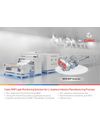
In lithium battery production, NMP (N-Methyl pyrrolidone), a critical solvent, is widely applied to dissolve binders including PVDF (Polyvinylidene Fluoride) for preparing cathode slurry. However, NMP features corrosive nature, posing risks to production equipment and battery performance, necessitating its removal through baking processes. Additionally, NMP’s flammability and explosivity at concentrations beyond the Lower Explosive Limit (LEL) demand r
Cubic Sensor and Instrument Co.,Ltd.

With the development of clean energy transportation, natural gas vehicles (NGVs), especially natural gas buses and heavy trucks, play an increasingly important role in developed regions in Europe. As a relatively clean form of fuel, natural gas takes into account both environmental friendliness and economy, but its high flammability also brings new safety challenges to vehicle operation. Especially when the vehicle is running, once methane leaks, it is very easy to cause fire or even exp
Cubic Sensor and Instrument Co.,Ltd.

In modern buildings, with the emphasis on indoor air quality and energy efficiency, many governments have already introduced a series of policies and rules. In Europe, the EU's Green Deal emphasizes the dual goals of improving air quality and reducing building energy consumption. In the United States, the US Environmental Protection Agency (EPA) has promoted companies to monitor and improve indoor air quality in accordance with the Clean Air Act to protect employee he
Cubic Sensor and Instrument Co.,Ltd.
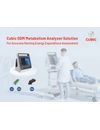
Resting energy expenditure (REE) is the largest part of human energy expenditure (60-70%) and an increase or decrease in REE would have a large impact on total energy expenditure[1]. Any state of disease, whether critical or not, may directly or indirectly affect REE, subsequently impacting a patient's nutritional needs[2]. Measuring Resting Energy Expenditure (REE) is crucial in clinical and public healthcare settings[3]. It helps optimize nutritional intake
Cubic Sensor and Instrument Co.,Ltd.
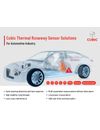
Nowadays, the widespread adoption of electric vehicles (EVs) has brought about an increased focus on automotive safety, particularly concerning thermal runaway, a potential risk leading to fires or even explosions. Thermal runaway events not only pose a significant threat to passenger safety but also result in substantial property damage. In recent years, several severe accidents have been attributed to thermal runaway. According to the latest data from
Cubic Sensor and Instrument Co.,Ltd.