


Efficiency Scientific Instrument Co., Ltd (ESI)
3 Applications found
Efficiency Scientific Instrument Co., Ltd (ESI) applications
Lubricating oil contains three main types of metal-related elements: additives, wear metals, and contaminants. Additives improve properties like viscosity and anti-wear performance. Monitoring their levels ensures the oil is suitable for the engine. Increased levels of wear metals like iron and copper may indicate abnormal engine wear. Contaminants such as dust and water can degrade oil performance and accelerate component wear. Monitoring these elements helps determine if the oil needs replacement or filtration.
In summary, lubricating oil is vital for machinery operation. Understanding its properties and continuously monitoring metal elements extends engine and machinery lifespan and optimizes performance.
Monazite, a phosphate mineral, is categorized within the realm of rare earth minerals as it harbors rare earth elements.
It predominantly exists as an accessory mineral within granite, syenite, gneiss, and granite pegmatite formations, and on occasion, can also be detected in hydrothermal deposits. The coloration of monazite may manifest as brownish-red, yellow, or brownish-yellow, accompanied by a greasy luster. In terms of hardness, it registers a Mohs scale value ranging from 5 to 5.5, and its density approximates 4.9 to 5.5 g/cm³. Monazite stands as a crucial mineral source for the extraction of rare earth elements, particularly those belonging to the cerium group. Its chemical composition frequently incorporates thorium, and in certain instances, the content of thorium dioxide can ascend to 30%.
1. Background and Introduction
Graphite is crucial for lithium - ion battery (LIB) anode, affecting energy density, cycling stability, and safety. But trace impurities like Fe, Ni, Cu, and magnetic particles can seriously degrade battery performance, leading to side reactions, electrolyte breakdown, and internal short - circuits.
As the new energy sector grows, high - purity graphite demand in LIBs surges. Both natural and synthetic graphite need tight quality control (e.g., <1 ppm for critical metals). Traditional ICP - MS detection is slow, destructive, and costly. X - ray fluorescence (XRF) spectroscopy offers a fast, non - destructive, high - throughput alternative. This paper focuses on the EDX8800G MAX vertical XRF spectrometer's use in detecting impurities in graphite - based anode materials to meet industry standards.
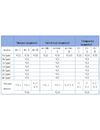
Regulations set technical limits for elemental content in different LIB graphite - based anodes, as follows.