


Halbes products
Halbes - Wind Turbine
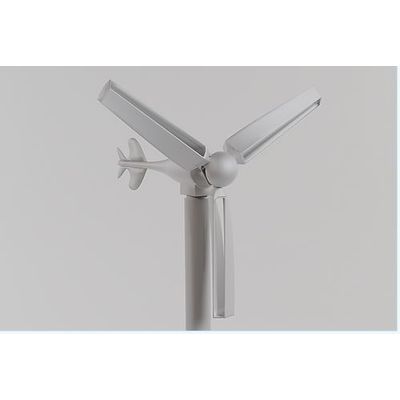
The wings are made of glass fiber-reinforced epoxy. Due to the properties of the material, they are both strong and flexible. Thanks to its dual profile and aerodynamic design, it is 43% more efficient than other standard wings. The lift coefficient (CL) is 3.2. The lift force is in the direction of wing rotation. High pressure is located on the trailing edge plane, and the drag force (CD) is also in the direction of wing rotation. At extreme wind speeds, the pressure on the front and rear surfaces of the profile neutralizes the pressure in the middle channel. This minimizes the risk of wing breakage, thus extending the wing`s lifespan. The wings start operating at wind speeds of 2 m/s and low RPM, reaching nominal power production at a speed of 16 m/s. Due to its aerodynamic structure and operation at low RPM, the noise level is significantly below standard limits.
Halbes - Wind Turbine
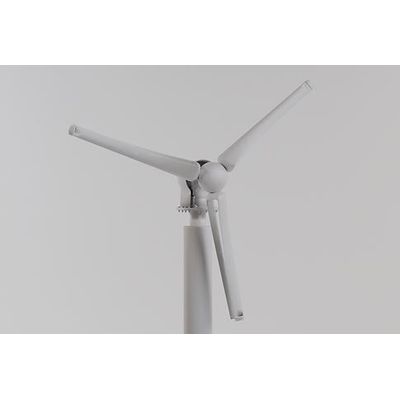
The wings are made of glass fiber-reinforced epoxy. Due to the properties of the material, they are both strong and flexible. Thanks to its dual profile and aerodynamic design, it is 43% more efficient than other standard wings. The lift coefficient (CL) is 3.2. The lift force is in the direction of wing rotation. High pressure is located on the trailing edge plane, and the drag force (CD) is also in the direction of wing rotation. At extreme wind speeds, the pressure on the front and rear surfaces of the profile neutralizes the pressure in the middle channel. This minimizes the risk of wing breakage, thus extending the wing`s lifespan. The wings start operating at wind speeds of 2 m/s and low RPM, reaching nominal power production at a speed of 11 m/s. Due to its aerodynamic structure and operation at low RPM, the noise level is significantly below standard limits.
Halbes - Wind Turbine
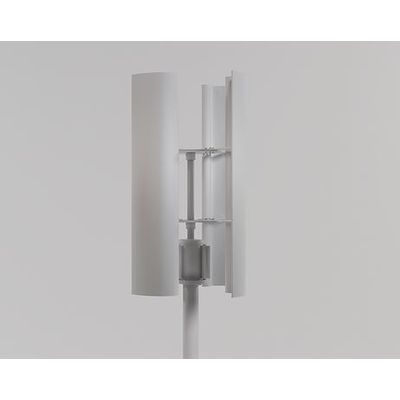
The wings are made of reinforced glass fiber epoxy. Due to its nature, it is durable and flexible. Thanks to its double profile and aerodynamic design difference, it is 43% more efficient than other wing standards. CL lift coefficient is 3.2. The lift force is in the direction of wing rotation. The high pressure is in the trailing edge plane, and the drag force CD is in the direction of wing rotation. At extreme wind speeds, the pressure on the front and rear surfaces of the profile cancels the pressure in the middle channel. In this way, the risk of wing breakage is minimized and wing life is extended. The wings start operating at 2 m/s wind speed and low speeds, and reach nominal power production at 11 m/s speed. Due to its aerodynamic structure and operation at low speeds, the noise level is well below the standards.