


HRS Heat Exchangers Ltd. news
Despite increased interest in various plant-based protein products, and greater awareness of the environmental consequences of many intensive livestock systems, global meat consumption continues to rise, as does
Industrial heat demand amounts to more than 20 per cent of global energy consumption. This means that the decarbonisation of industrial heat is essential to meet net-zero targets, and the move to electrify a wide range of processes and equipment from space heating to furnaces is one of the most obvious ways to achieve this. The electrification of industrial heating processes can also deliver other benefits including greater energy efficiency and lower energy cost.
However, there are&n
As the American Biogas Council (ABC) points out, ‘While prevention remains the best strategy to reduce wasted food, biogas systems help ensure the food that still gets discarded is used productively.’ Unlike
When making any investment decision, particularly when purchasing high-value processing equipment, capital cost is usually one of the first things to be considered. But a far more accurate metric is actually the Total Cost of Ownership (TCO) or Total Expenditure (totex). This applies as much to heat exchangers and thermal processing systems as any other piece of equipment.
A focus on capital cost (capex) is inevitably linked with the payback period, which is determined by how long the
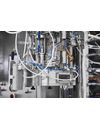
It is always important to choose the right heat exchanger for the right product and process, whatever industry you are working in. However, for manufacturers of fruit products and fruit-based drinks the wrong system can affect not only operational efficiency or cost, but also product quality and consistency with potentially significant results for your business.
The combination of pasteurisation and aseptic filling is widespread due to its ability to ensure microbial

Heat exchangers are key components in many processes in the food industry, from heating and cooling to pasteurisation, sterilisation and evaporation, coming in many forms, from plate heat exchangers to corrugated tube-in-tube and scraped surface designs. With so many different food and drink products in production across the globe, choosing the right heat exchanger for the right product and the right process is vital, not only to ensure effective processing and optimum product quality, but al
HRS Heat Exchangers are well known for producing compact, reliable heat exchanger solutions which offer exceptional levels of heat transfer and energy efficiency. The key to this is our use of corrugated tubes which offer a number of benefits, such as reducing fouling. What is less well known is that the corrugation profile is tailored to every individual heat exchanger design and application.
We have written before about the numerous benefits which corrugated tubes p
The experienced team from HRS Heat Exchangers will return to Valladolid Fair in October, where visitors will quickly be able to identify them thanks to trademark orange shoes. They will be happy to discuss the importance of biogas project optimisation in an increasingly uncertain world and provide real case studies using HRS systems and components from biogas projects around the globe.
Over the course of its 40-year history, HRS Heat Exchangers has become a global lea
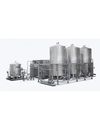
HRS Heat Exchangers has welcomed the publication of a new Clean Flexibility Roadmap1 by the Department of Energy Security and Net Zero (DESNZ) which expands on the UK Government’s previously narrow view of the potential of biomethane to deliver significant carbon reductions.
Not only does the report (which has been produced in conjunction with Ofgem and the National Energy System Operator (NESO), alongside energy industry stakeholders and consume
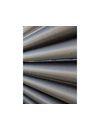
In theory, modern heat exchangers can be made from a wide range of materials, including copper, copper/nickel, aluminium, carbon steel and stainless steel. In this article we consider why this is the case, and in particular the major benefits of thin-wall corrugated tube heat exchangers made from stainless steel.
As with other aspects of heat exchanger design, the choice of construction material depends on a number of factors based on the end use. These include genera