


Kinetic Traction Systems products
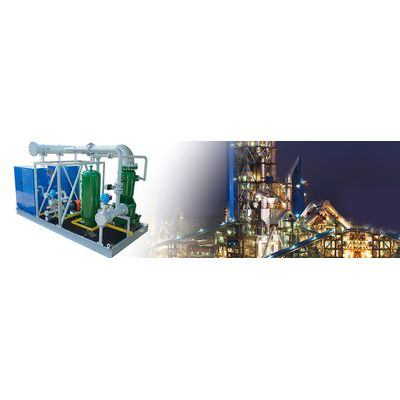
Waste Heat Recovery Generator
The Challenge: Many industrial processes consume enormous amounts of energy and are directly responsible for significant amounts of all CO2 emissions globally. Additionally, nearly half of all industrial processing energy consumption is released as waste heat. Waste heat energy can be captured and converted into high quality electrical energy to reduce overall energy consumption and greenhouse gases. Benefits of Waste-Heat Generators: Kinetic Traction Systems (KTSi) waste heat recovery systems utilize existing industrial process waste heat energy sources to generate high quality electricity in power ranges from 300 kWe to 500 kWe. The WHRG is designed using Organic Rankine Cycle technology that converts low and medium temperature process heat into electricity via a high speed turbine generator power unit.
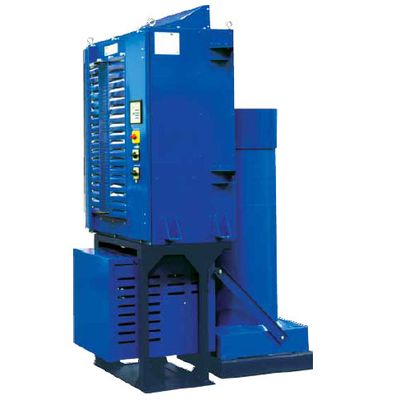
Flywheel Energy Storage Rail
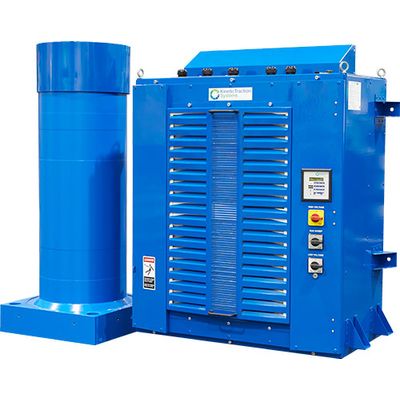
Flywheel Energy Storage UPS & Power Quality
The Challenge: Power quality is the frequency and severity of disturbances from the standard AC sinusoidal waveform on the incoming power supplied to electrical equipment. These deviations may adversely affect safe or reliable operation of sensitive equipment, such as computers and industrial controllers. Often the loss of productivity and process scrap resulting from poor electrical quality and/or equipment failure far exceeds the direct damages of system downtime and equipment failure costs.
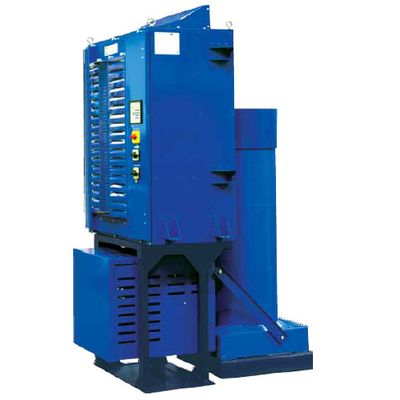
Flywheel Energy Storage Grid
The Challenge: On power grids that utilize renewable resources such as wind and solar, short-term fluctuations in these resources can cause significant power quality problems and reliance on non-renewable generation sources. This is especially true when trying to match supply with demand, particularly on remote or islanded micro-grids where there is either no additional connection or a weak connection to the main utility grid. In these micro-grid networks when renewable supply exceeds demand, such as during high wind or bright sun conditions, the conventional approach is connecting additional demand loads such as large resistor banks. When supply is less than demand during low wind conditions or cloud coverage, a diesel generator is often used to supply the power. In both scenarios, excess power is wasted and momentary shortfalls are supplemented by non-renewable power. Overall grid system control is also difficult to optimize resulting in poor power quality.