


- Home
- Companies
- Pro Enviro Ltd.
- Products
Pro Enviro Ltd. products
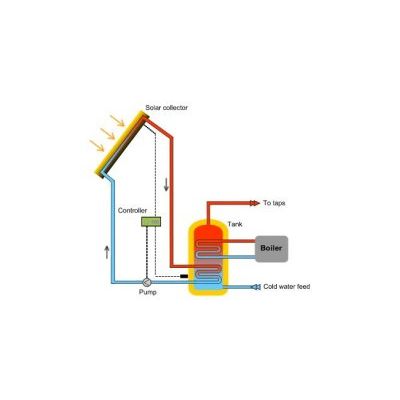
Solar Hot Water Systems
Solar water heating is water heated by the use of solar energy. Solar heating systems are generally composed of solar thermal collectors, a water storage tank or another point of usage, interconnecting pipes and a fluid system to move the heat from the collector to the tank. This thermodynamic approach is distinct from semiconductor photovoltaic (PV) cells that generate electricity from light; solar water heating deals with the direct heating of liquids by the sun with no electricity being generated. A solar water heating system may use electricity for pumping the fluid, and have a reservoir or tank for heat storage and subsequent use. The water can be heated for a wide variety of uses, including home, business and industrial uses. Heating swimming pools, underfloor heating or energy input for space heating or cooling are common examples of solar water heating.
Air Source Heat Pumps
Air source heat pumps absorb heat from the outside air This is commonly used to heat radiators, underfloor heating systems, or warm air convectors and hot water in your premises. An air source heat pump extracts heat from the outside air in the same way that a fridge extracts heat from its inside. It can extract heat from the air even when the outside temperature is as low as minus 15°C.
Biomass Heating Systems
Biomass energy technology uses plant materials to provide an energy source. This may be in the form of raw plant matter, such as logs, wood chips, wood pellets or wood waste and can also be from the gases given off as matter decays, mainly in the form of methane (CH4). The use of a sustainable, constantly replenished bio crop in theory allows for the carbon dioxide released while being burnt to be offset by the CO2 absorbed by the crop as it grows. For this reason biomass is a renewable, low carbon fuel source.
Combined Heat and Power (CHP)
Combined heat and power (CHP) is a way of using the heat from power production for increased efficiency. Conventional energy generation can be very wasteful of heat, even in modern coal and gas fired power stations, where possibly only a third of the energy used to power the stations goes directly to energy production, the other two thirds is potentially lost. It is reported by the Combined Heat and Power Association that CHP plants can be as much as 80% efficient or more at their point of use compared to a coal-fired plant with an efficiency of around 38%.