


- Home
- Companies
- Hiden Analytical Ltd.
- News
- Initial formaldehyde generation as a ...
Initial formaldehyde generation as a predictive marker for long-term stability of Ni-rich Li-ion batteries under abusive conditions
Nickel-rich layered oxide cathodes (e.g., NCA90) are among the most promising materials for high-energy lithium-ion batteries, but their stability under abusive conditions remains a key barrier for long-term use in electric vehicles and energy storage. These chemistries are prone to severe electrolyte decomposition, which accelerates capacity fade and can pose safety hazards. Our study identifies formaldehyde (CH2O) generation in the very first cycle as a reliable predictive marker of long-term battery stability. Specifically, we show that the initial amount of CH2O formed under stress correlates strongly with future capacity retention, voltage hysteresis, and energy efficiency over extended cycling.
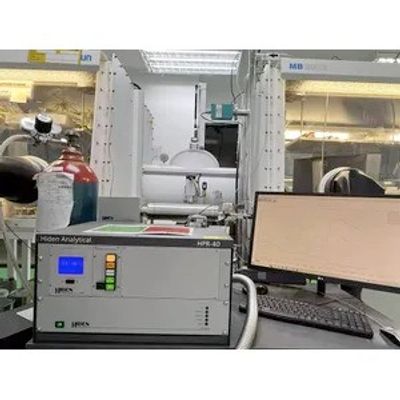
Using 18650-format NCA90/graphite cells fabricated under pilot-line conditions, we systematically examined overcharge, over-discharge, and fast-charging scenarios. With the aid of Hiden’s HPR-40 DEMS system, we monitored gas evolution in real-time and complemented this with ¹H NMR spectroscopy of the electrolyte. Our findings revealed:
- Overcharge leads to exponential increases in CH2O with voltage escalation (4.5–4.9 V), indicating severe oxidative decomposition.
- Over-discharge produces CH2O more gradually, but still links to long-term degradation.
- Fast charging (2C), even without lithium plating, generates detectable CH2O within the electrolyte, signaling interfacial instability.
Computational free-energy analyses confirmed that CO2 reduction at lithiated graphite (LiC6) surfaces spontaneously yields CH2O. Experimentally, we verified that lithiated graphite catalyzes CO2 conversion to CH2O, demonstrating the importance of electrode cross-talk.
Most importantly, cells showing lower initial CH2O generation consistently delivered superior cycle life. Optimized electrode designs, compared to thin or thick counterparts, minimized CH2O formation and displayed the best long-term stability across 1000 cycles.
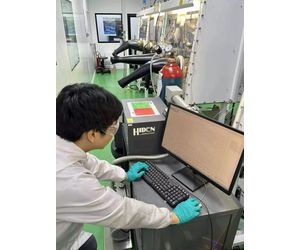
Figure 2 (right). Postdoctoral researcher, Dr. Nattanon Joraleechanchai.
- Early diagnostic marker - Initial CH2O levels forecast long-term performance and safety, reducing reliance on time- and cost-intensive cycling tests.
- Mechanistic insight - CH2O arises from CO2 reduction at lithiated graphite, linking gas-phase and liquid-phase degradation pathways.
- Practical screening tool - The combination of Hiden DEMS and NMR establishes a workflow applicable to electrolyte development, formation optimization, and quality control.
- Industrial relevance - CH2O detection, already feasible with affordable sensors, can be integrated into EV or ESS systems as a state-of-health monitoring tool.
This research provides a fundamental and practical framework for mitigating degradation in Ni-rich cathodes by designing electrolytes and interfaces that suppress CH2O formation. It also highlights how advanced analytical tools, such as those from Hiden, enable rapid and predictive evaluation of cell chemistry under real-world stress.
Project Summary by: Dr. Montree Sawangphruk, Director of Centre of Excellence for Energy Storage Technology (CEST), Department of Chemical and Biomolecular Engineering, School of Energy Science and Engineering (ESE), Vidyasirimedhi Institute of Science and Technology (VISTEC).

Paper Reference: Sangsanit, T., Santiyuk, K., Songthana, R., Homlamai, K., Prempluem, S., Tejangkura, W. and Sawangphruk, M. (2024) ‘Initial formaldehyde generation as a predictive marker for long-term stability of Ni-rich Li-ion batteries under abusive conditions.’ Journal of Power Sources. Elsevier BV, 611, August, p. 234770. DOI: 10.1016/j.jpowsour.2024.234770.