- Home
- Companies
- ASYS Group
- Products
- ASYS - Fuel Cell

ASYS - Fuel Cell
Production Solutions for the Fuel Cell: In hydrogen-powered vehicles or as a decentralized energy supplier, they make life electric: Fuel cells are already convincing with their high efficiency today and show the way to the technological world of tomorrow. Used as electrolyzers, they provide green hydrogen using electricity generated from renewable sources.
The manufacturing process of the individual membranes and their following stacking to a powerful fuel cell module requires specific process know-how. Individual process steps are linked to a powerful overall concept. As an established supplier for production automation, we combine the expertise from the different areas with reliability and precision.
Material Logistics
Our „Material Logistics“ solutions have already revolutionized material flow and production-related buffering of materials in electronics manufacturing.
Printing
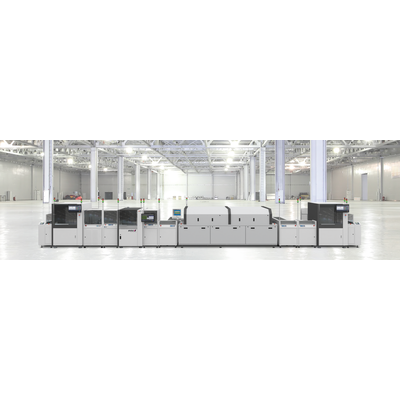
Our know-how in the SERIO product range includes the high-precision printing of different, very thin and fragile substrates. These are requirements that we also face in the membranes of fuel cells. The EKRA printer portfolio reaches from stand-alone systems up to one second high speed lines. In Addition, we can fall back on years of experience in coating in the field of photovoltaics.
Laser Technology
For welding metallic bipolar plates, we use solutions from the POLYPHOS WL product range Other laser processes include laser direct marking of bipolar plates and ceramic membranes from the POLYPHOS MK product range and burr-free cutting of ceramic membranes for SOC applications with POLYPHOS MM.
Customer specific Assembly Solutions
Our business unit Inventus is specialized in the development and realization of complex automation tasks as for example required for stack construction. Furthermore, we offer individual control options to monitor for example the paste application of the membrane or the sealing pressure of the bipolar plate.
The result of this broad diversification are innovative manufacturing and assembly concepts for your fuel cell production. We support you with entry-level or high-volume variants, in single or turn-key solutions.
A fuel cell usually consists of a membrane electrode assembly (MEA), which is enclosed by two metallic pole plates (bipolar plates). The anode and cathode gases hydrogen and oxygen are transported through the pole plates to the MEA. The actual electrochemical reaction to generate electricity takes place in here. A broad differentiation of fuel cells is based on the operating temperature. While „low temperature“ fuel cells usually operate in the range of <100°C, the operating temperature of a „high temperature“ fuel cell is in the range of 700°-1000°C. High-temperature cells are currently based on ceramic membrane materials (SOFC) or metallic membrane materials (MSC).