


- Home
- Companies
- New Instruments and Research for ...
- Products
- Nira - Automatic Air Recirculation ...
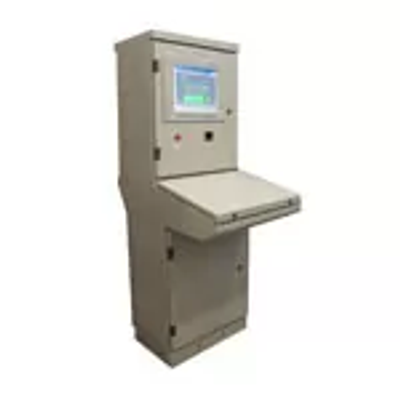
Nira - Automatic Air Recirculation Control Systems
Multi-line automatic air recirculation control for energy saving and flow rate reduction for air treating systems Infrared LEL monitoring systems
During the exsiccation process of the inks and the vaporization of the solvent, a lot of energy is required to heat the fresh air up to the desired temperature.
The NIRA LEL Monitoring Systems continuously check the solvent concentration inside the drying stations. In case the solvent concentration exceeds the safety set point, the NIRA LEL system sends out an alarm in order to immediately stop the machine production.
When the solvent concentration inside the drying station is lower than its admissible level, the exhaust air can be recycled and reused as fresh air.
All drying stations are always equipped with their own supply and suction fans. Through some mechanical ducts and some modulating dampers, the NIRA’s Automatic Air Recirculation Systems are able to control the recycled air on the bases of the solvent concentration, inside the drying stations. This system controls the hot air recycled but always keeping continuously the solvent concentration under control and in full safety conditions.
In this way, the energy costs (electricity, natural gas or fuel oil) associated to air heating systems for the drying stations can be drastically reduced from 30 up to 60% of the current energy consumption.
The energy saving is based on the following process information:
- Number of the drying stations;
- Average air flow in evacuation from each drying station (in Nm3/h);
- Average inlet air temperature (in °C);
- Average drying temperature (in °C);
- Average solvent concentration in evacuation from each drying station (in gr/m3 or % LEL);
- Average machine working hours per year (in h/y);
- Average coating, laminating and printing speed (in mt/min.);
- Average coating, laminating and printing coverage (in %);
- Type of heating systems (Natural gas, electricity or fuel oil);
- Energy cost (€/m3 €/kWh or €/kg);
With these process information and after a technical inspection, we will be able to provide detailed proposals, air flow reductions, energy saving estimations and investment payback time.
These systems can be integrated on any type of machine, like coating, laminating, flexographic and gravure press.
- More safety inside the plant by monitoring and keeping under tontrol the solvent tontentrations.
- Saving on elettritity, fuel oil or natural gas tonsumption on the air heating systems.
- Lower investments on air treating system (RSPorRTO).
- Lower residual solvent on laminated, tooted or printed flexible materials.