


- Home
- Companies
- Dawsongroup Energy Solutions
- Products
- Dawsongroup - Model BESS - Battery ...
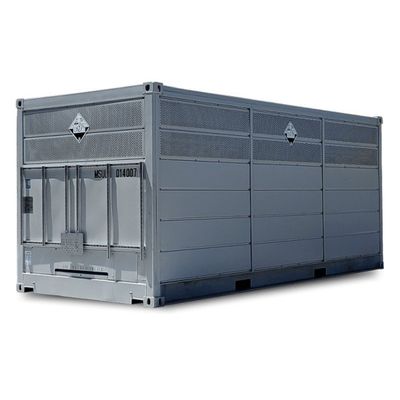
Dawsongroup - Model BESS -Battery Energy Storage Systems
Battery Energy Storage Systems (BESS) are revolutionising on-site energy storage by providing reliable, efficient, and cost-effective solutions that empower individuals and businesses to take control of their energy needs. With BESS, you can reduce your reliance on traditional energy sources, such as coal or gas, and enjoy the benefits of a sustainable energy future.
BESS has opened a world of possibilities for the efficient management of energy. Its primary applications offer a versatile range of benefits that allow for the optimised use of energy sources.
We have two cutting-edge technologies: vanadium flow and lithium phosphate batteries. Our advanced batteries are designed to store and use energy in the most efficient way possible.
Vanadium Flow
- Non-flammable
- Less degradation
- In depth charge and discharge
- Safe, long-life cycle
- Found in abundance in the Earth’s crust
- Flexible technology platform to adapt to changes in the future
Lithium Phosphate
- High density – takes up less space and stores more power
- Holds charge for longer duration
- Reduces your carbon footprint
- Immediate savings on electricity bills from day one – with no upfront costs
- Easy to transport and can be accommodated in the smallest of spaces
Backup power
BESS provides a reliable backup power source in the event of power outages or other disruptions, ensuring that critical operations can continue uninterrupted.
Cost-effective
BESS offers a cost-effective alternative to traditional backup power solutions which can be expensive to run and maintain.
Peak shaving
The BESS can help with this by gathering energy from the grid during times when there is low demand for energy, or off-peak periods. This energy can then be stored in the BESS and discharged during peak periods, when energy rates are typically higher.