
- Home
- Equipment
Refine by
Calcarb Energy Equipment & Supplies
5 equipment items found

Manufactured by:Mississippi Lime Company (MLC) based inSt. Louis, MISSOURI (USA)
CalCarb®?AC3 is a 3-micron median particle size, off-white natural calcium carbonate filler. CalCarb®?AC3 is produced at our Ste. Genevieve, Missouri facility from a limestone deposit of exceptional consistency. CalCarb®?AC3 is especially suitable for PVC and LDPE plastic compounds where its 15 micron top-cut, low silica content, and spherical shape combine to give low processing ...
Manufactured by:Mississippi Lime Company (MLC) based inSt. Louis, MISSOURI (USA)
CalCarb®?AC3 is a 3-micron median particle size, off-white natural calcium carbonate filler. CalCarb®?AC3 is produced at our Ste. Genevieve, Missouri facility from a limestone deposit of exceptional consistency. CalCarb®?AC3 is especially suitable for PVC and LDPE plastic compounds where its 15 micron top-cut, low silica content, and spherical shape combine to give low processing ...
Manufactured by:Mississippi Lime Company (MLC) based inSt. Louis, MISSOURI (USA)
The MLC CalCarb®?Calcium Carbonate family of products is mined from the high purity formation in Ste. Genevieve, Missouri, which consists of limestone with an average calcium carbonate content of 98.5%. CalCarb®?products are sized for a wide variety of applications ranging from farming to field ...
Manufactured by:Mississippi Lime Company (MLC) based inSt. Louis, MISSOURI (USA)
The MLC CalCarb®?Calcium Carbonate family of products is mined from the high purity formation in Ste. Genevieve, Missouri, which consists of limestone with an average calcium carbonate content of 98.5%. CalCarb®?products are sized for a wide variety of applications ranging from farming to field ...
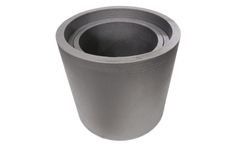
Manufactured by:Mersen based inPagny sur Moselle, FRANCE
CALCARB® CBCF is made up of carbon fibres measuring just a few millimeters in length, emanating from rayon fibres. These fibres are interconnected in a matrix produced by the carbonisation of phenolic resin. The material is then vacuum-treated at temperatures above 2,000°C to ensure its temperature stability and the absence of outgassing. As a benchmark, the material contains no more than ...