


- Home
- Companies
- Canalplast S.p.A.
- Products
- Canalplast - Model DIN Rail - Din Rail ...
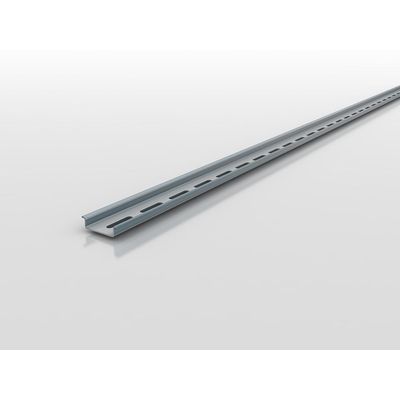
Canalplast - Model DIN Rail -Din Rail for Mounting Terminal Block
Canalplast S.p.A. offers a comprehensive range of DIN rails crafted from Z100 hot-dip galvanized steel, known in the industry as Sendzimir. These rails are designed for mounting both modular and non-modular electrical equipment within electrical panels, providing a robust anchoring solution for circuit breakers. The DIN rails comply with international standard DIN CEI EN 60715 and RoHS directives, ensuring high compatibility and safety. With a standard length of 2 meters and a zinc coating thickness of 7 microns, these rails are ideally suited for industrial and residential applications where they support the swift creation of modular block circuits through terminal blocks or connection terminals. Their material composition enables resistance to wear and corrosion, enhancing durability in demanding environments. Canalplast's DIN rails are integral to maintaining efficient, organized, and safe electrical installations.
Canalplast din rails, made of Z100 hot-dip galvanized steel (Sendzimir), allow the mounting of modular and non-modular electrical equipment inside electrical panels. Born as an anchoring tool for circuit breakers, these guides are inserted inside the electrical panels in the industrial and civil sectors.
Type PD:
- Material: Sendzimir zinc plating Z100
- Lenght: 2 mt
- Thickness of coverting: 7 micron (UNI EN 10142)
- Design: according to standard DIN CEI EN 60715
- Compliance: RoHS
- Colours: Sendzimir
Galvanized steel din rails are used inside panel boards as a support for mounting switches, terminals, fuse holders and splitters with the same type of connection. Advantages of using din rails include:
- Versatility of application;
- Quick installation with the possibility of adjustment;
- High mechanical resistance.
In addition, since din rails are usually mounted in electrical cabinets, they allow you to quickly create modular block circuits, with relatively simple interconnections to be realized through special terminal blocks or connection terminals.