


- Home
- Companies
- Nabla Wind Hub
- Products
- Model Retipping - Design Conditions of ...
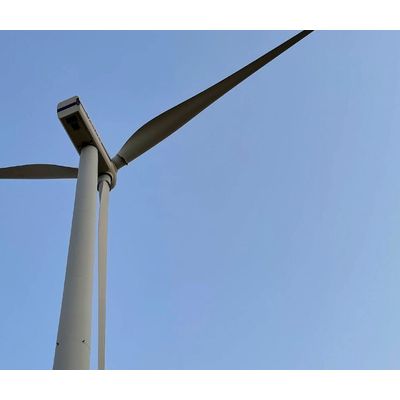
Model Retipping -Design Conditions of Old Wind Turbines
The retipping solution consists of using tip extensions of 1, 2 or 3 meters depending on the site conditions to ensure an optimal tip extension for each wind turbine. The proposed length for the tip extension depends on the wind conditions of each site and it is designed using aerodynamic nested optimization algorithms that balance the chord and twist distributions to find the optimal power coefficient and energy extraction.
The tip extensions are designed using the independent aeroelastic models for each turbine, created via reverse engineering and owned by nabla, making this process independent from the manufacturer. The intensive use of the aeroelastic model allows to guarantee the structural safety of the wind turbine in all components, verifying with a specific site suitability report the extreme loads, blade deflections towards the tower and the accumulation of fatigue in the different components.
Why retipping:
- Most cost effective re-rotoring solution
- Flexible solution: optimal AEP upgrade adapted to each site
- Minimal impact on the turbine
- Minimizing permitting risks
- Fast track certification via EC directive 2006/42
- Plug&play no need to change the controller
- Up-tower installation without cranes
- Installed and ready to use in 8h
- Can be reversed to original configuration
- Best value for money
- PBP 3 years (reference from first fleet)
- IRR 10% (reference from first fleet)
Although benign, average and restrictive site conditions have been defined for tips design and certification purposes. For every wind farm, a specific site suitability report will be issued, analyzing in detail wind conditions, extreme loads, blade deflections towards the tower, and fatigue.
All relevant sources of aeroacoustic noise have been evaluated; boundary layer trailing edge noise, separated flow noise, laminar boundary layer vortex shedding noise, trailing edge bluntness vortex shedding noise, turbulent inflow noise, and airfoil tip vortex formation noise, using nrel nafnoise aeroacoustic code for wind turbines.
Noise increase is considered negligible and inside the uncertainties of the OEMs that are in +/-2dB
Tip extension internal structures are based on lean engineering and design-to-manufacture concepts, minimizing the number of substructures and subassemblies to minimize failure modes.