


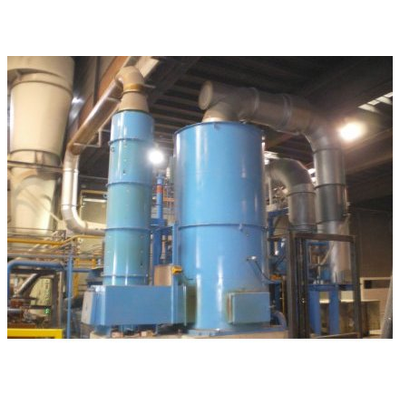
Dross - Post Combustion System
Unfortunately, some metals to be recycled are heavily contaminated with organic compounds. These pollutants are frequently present in various types of metal waste:
Greases and oils in used car engines
- Tars associated with zinc
- Plastics present in lead batteries
- Electronic components on computer boards
- Sheathed cables containing lead
During the melting of this waste in the rotary furnace (TRF), a significant quantity of polluting gases and unburned compounds is generated: hydrocarbons, volatile organic compounds (VOCs), tars, thick fumes, etc. These toxic gases are then extracted through the extraction hood.
However, the dust collection system alone cannot effectively treat these organic and volatile compounds. This poses a risk not only to the environment, but also to facility safety and regulatory compliance.
Proposed solution: Installation of a post-combustion chamber
We recommend integrating a post-combustion chamber between the rotary kiln (TRF) and the flue gas filtration system.
This chamber allows for:
- Secondary combustion of unburned gases,
- Effective destruction of VOCs, hydrocarbons, tars, and other toxic by-products,
- Significantly reduction of hazardous air emissions,
- Improved overall flue gas treatment performance.
Post-combustion typically operates at high temperatures (often >850°C), with sufficient residence time to ensure complete oxidation of residual gases.
Objectives and benefits:
- Compliance with current environmental standards, particularly regarding organic compound and dust emissions,
- Preservation of filtration equipment by limiting clogging and extending its lifespan,
- Improvement of facility safety by reducing risks associated with flammable or toxic gases,
- Improved air quality at the facility outlet.