


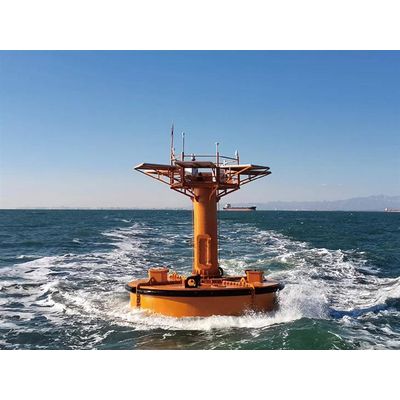
Leice - Floating Lidar Buoy
A floating lidar buoy is a buoy-based remote sensing system that uses lidar technology to measure wind speed, direction, and other atmospheric parameters at various heights above the ocean surface. It is specifically designed for offshore wind resource assessment and monitoring. A floating lidar buoy consists of a buoy that is equipped with a lidar sensor mounted on a mast. The lidar sensor emits laser beams towards the atmosphere, and the reflected light is analyzed to determine wind characteristics.
What Is Floating Lidar Buoy
A floating lidar buoy is a buoy-based remote sensing system that uses lidar technology to measure wind speed, direction, and other atmospheric parameters at various heights above the ocean surface. It is specifically designed for offshore wind resource assessment and monitoring. A floating lidar buoy consists of a buoy that is equipped with a lidar sensor mounted on a mast. The lidar sensor emits laser beams towards the atmosphere, and the reflected light is analyzed to determine wind characteristics.
Monitoring
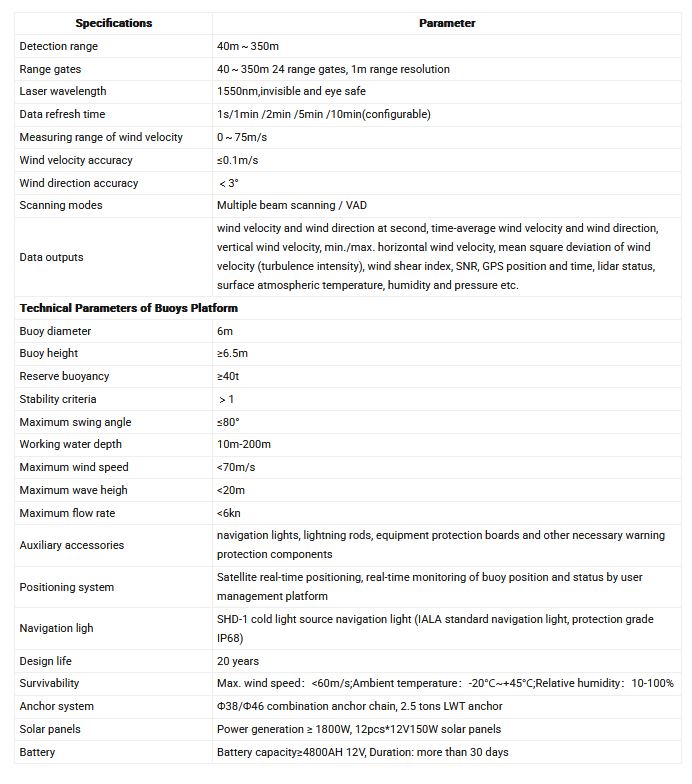
The floating lidar buoy is designed for continuous operation, enabling uninterrupted monitoring of oceanic conditions. This allows for real-time data collection, enabling quick responses to changes in the marine environment.
Versatility
Floating lidar buoys can be easily deployed and repositioned, adapting to various locations and research needs. Whether it`s monitoring ocean currents, wind patterns, or pollution levels, the buoy can be configured to collect the desired data.
Data accuracy
The lidar technology employed by the buoy provides high-resolution measurements, ensuring accurate data collection. This accuracy is crucial in various applications, such as oceanographic research, climate studies, and navigation safety.
Data transmission
Floating lidar buoys are equipped with communication systems that enable real-time data transmission. This allows researchers and operators to access the collected data promptly, enabling informed decision-making and rapid responses.