


- Home
- Companies
- Aero Tec Laboratories Inc (ATL)
- Products
- ATL - Model UAV - Fuel Bladders
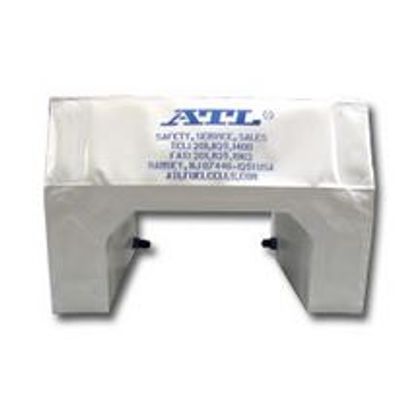
ATL - Model UAV -Fuel Bladders
ATL, an AS9100D and ISO 9001:2015 company, proudly produces flexible fuel cell bladder tanks for aircraft, drones/UAVs, rotorcraft, missiles, ROVs & UUVs. These tough, light-weight flex-tanks resist motor gasoline, diesel, avgas and JP fuels including JP-8, JP-10 and JP-TS. Other bladders are available for hydrogen, propane and alcohol fuels.
ATL`s fuel cell installations can be designed as ventless collapsing "diaphragms" or as vented non-collapsing "liners."
Flexible bladder materials from ATL span the range from super-light .010" (.25 mm) thickness to .040" (1.02 mm) "crashworthy" and then to .085" (2.16 mm) self-sealing variety.
Modern CAD systems create soft tooling or "e-templates" which enable ATL to offer prototype bladders within 2 weeks, and ramped-up production within a month.
- Fully collapsible for easy installation/removal
- Available in any size, geometry, or material
- Electronically templated; Near zero tooling cost
- Light weight and thin-walled for greater fuel capacity
- Total fuel scavenging options
- Low fuel diffusion rate; can surpass Mil-DTL-6396F
- CAD/CAM production for accuracy and reproducibility
- Light weight composite fittings and flanges
- Resistant to Avgas, Mogas, JP4, 5, 8, 10; Jet A, B; Kerosene,
Bio-Ethanol E10, Diesel, Bio-Diesel, Bio-Butanol B10 and Bio-Jet - Special bladder materials available for rocket/missile/torpedo fuels. Specifically: hydrogen peroxide, hydrazine, Otto Fuel II, HAN fuel, JP-7, methanol, nitromethane, propane,
butane and others - Baffles, vent valves, quantity gauges, drains, collectors etc. fully integrated
- General Atomics Predator Award for Quality and On-time delivery
- Can serve as secondary fuel containment if wing or fuselage is cracked or punctured
- Immune to shock, impact, vibration, launching, retrieval and hard landings
- Operates to 60,000 ft. within temperatures of 200°F (95°C) and
-60°F (-50°C) - Modest cost, long life, low-to-zero maintenance
- Safety foam explosion-proofing system option