


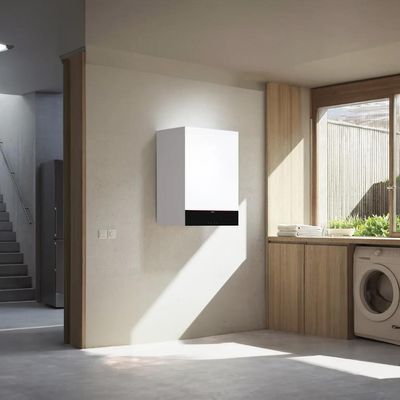
Gas Heating System
Gradual transition from gas heating to renewable energies. Gas heating systems generally burn fossil fuels such as natural gas and liquid gas, and less frequently biogas. This means that they emit CO2 just like oil heating systems . To date, almost 30 percent of heating systems in private households in Baden-Württemberg are powered by gas. In the future, emissions of this climate-damaging gas are to be significantly reduced. In a new heating system, 65 percent of the energy used must be renewable. The Building Energy Act and annually rising prices for CO2 are making gas heating systems a thing of the past.
Systems that have already been installed can still be made future-proof through hybrid additions, thus providing a starting point for the gradual transition to renewable energies .
Do you want to convert your gas heating? Our energy consultants will determine the possibilities of hybrid combinations.
Building Energy Act
Installing gas heating in new buildings does not make sense in terms of energy today. Well-insulated houses are moving towards environmentally friendly heating technologies such as heat pumps or hybrid heating systems based on renewable energies. Replacing gas heating in existing buildings is still possible. However, the system must also be able to run on biogas or hydrogen.
This is stipulated by the Renewable Heat Act, which has been in force in Baden-Württemberg since 2010, as well as the nationwide Building Energy Act. The latter stipulates the periodic increase in the use of non-fossil fuels such as biogas or hydrogen by 2040. The installation of gas heating will not be prohibited until 2045. By then, all heating systems must have been converted to 100 percent renewable energy. Our energy consultants will be happy to help you through the jungle of legislation. They will know whether your heating system meets the legal requirements and how you can make it fit for the coming years.
modernization
Energy and therefore money can be saved today. Our specialist technicians will be happy to carry out a modernization check on your gas heating system. If it has already been in use for 15 to 20 years, the system is considered outdated. Modern gas condensing boilers work much more efficiently and therefore reduce CO2 emissions . This is why it is usually worth purchasing a new system.
It is also worth considering the boiler. If you still have a constant temperature boiler or a low temperature boiler, it is definitely worth replacing them with a condensing boiler. This uses between ten and 30 percent less gas and achieves an efficiency of up to 96 percent. This increases the efficiency of the system.
Investing in a modern high-efficiency pump also has a positive effect on the energy balance of a gas heating system. It reduces the electricity costs and therefore also eases the burden on your wallet. Replacing a circulation pump is also subsidized by the state.
Cost
Gas heaters are considered to be inexpensive to purchase. However, when buying a new heater, it is worth considering the total costs over its lifespan of 20 to 30 years. Our energy consultants consider the following in their overall calculation:
- dimensioning
- technology used
- size of the water reservoir
- exhaust pipe
- a possibly necessary chimney renovation
- Costs for delivery, installation and commissioning
- operating energy
- fuel costs
- CO 2 tax
- maintenance and repair
- inspection by the chimney sweep
- funding for hybrid heating systems