

- Home
- Companies
- Novelty Structures Ltd
- Products
- High-Temperature Pressure Vessels
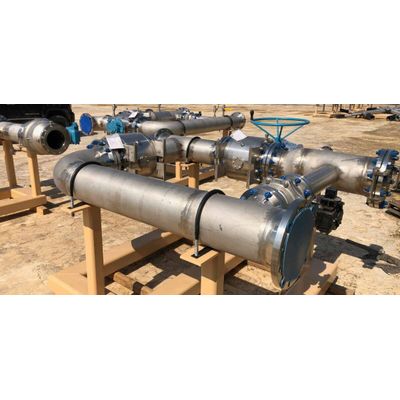
High-Temperature Pressure Vessels
A pressure vessel is defined as a container with a pressure differential between inside and outside. The inside pressure is usually higher than the outside, except for some isolated situations. The fluid inside the vessel may undergo a change in state as in the case of steam boilers, or may combine with other reagents as in the case of a chemical reactor. Pressure vessels often have a combination of high pressures together with high temperatures, and in some cases flammable fluids or highly radioactive materials.
Pressure vessels are used in a number of industries; for example, the power generation industry for fossil and nuclear power, the petrochemical industry for storing and processing crude petroleum oil in tank farms as well as storing gasoline in service stations, and the chemical industry (in chemical reactors) to name but a few.
The size and geometric form of pressure vessels vary greatly from the large cylindrical vessels used for high-pressure gas storage to the small size used as hydraulic units for aircraft. Some are buried in the ground or deep in the ocean, but most are positioned on ground or supported in platforms.
Pressure vessels are usually spherical or cylindrical, with domed ends. The cylindrical vessels are generally preferred, since they present simpler manufacturing problems and make better use of the available space.
Spherical vessels have the advantage of requiring thinner walls for a given pressure and diameter than the equivalent cylinder. Therefore they are used for large gas or liquid containers, gas-cooled nuclear reactors, containment buildings for nuclear plant, and so on