

- Home
- Companies
- Heatsystems GmbH & Co. KG
- Products
- Heatsystems - Industrial Heating and ...
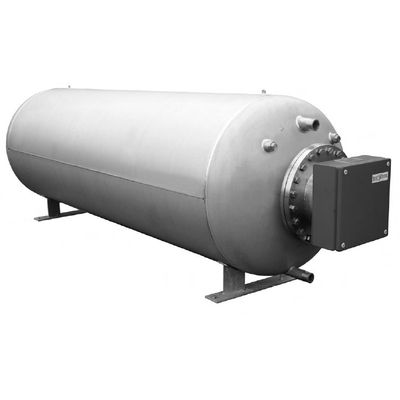
Heatsystems - Industrial Heating and Storage Vessels
The industrial heating and storage vessels from heatsystems GmbH & Co. KG are engineered for integration with electrical heaters, allowing operation at specific pressures and temperatures tailored to various industrial applications. These vessels are versatile, accommodating different fluids, including water of varying qualities. The product design includes materials for both wetted and unheated components, alongside a heating surface if necessary. Electrical heating systems can feature built-in controls for low power operations or external switchgear cabinets. The switchgear can be customized to match process requirements. Insulation options are offered either as part of the delivery or customizable based on customer-provided specifications. Fluid connections are also configurable to meet project-specific requirements, enabling seamless integration into existing systems. Overall, these vessels are a critical component in applications where precise temperature control and reliability are essential.
The containers from f heatsystems are matched to the electrical heaters and have been designed to the required pressures and temperatures.
Normally, water of different quality is stored as a fluid in the containers:
I. Water
- Drinking water
- Circulating and/or heating water
- Softened water
- Ultra-pure water
- Fully desalted water
Of course, the containers can also contain other fluids.
Normally, the containers are produced of the following materials:
Materials of the wetted and unheated components
- Carbon steel
- Corrosion-resistant stainless steel
If a heating surface is installed (traditional or electrical) the following materials are used:
Materials of the heating surface:
- Carbon steel
- Corrosion-resistant stainless steel
- Titanium, Hastelloy, special materials
The heating of the containers can both be equipped with a built-in control system (for low power) or an external switchgear cabinet or for load switching by customer-provided switchgear and control gear. The electrical heating power can be divided into one or several heating stages. This division can individually be adjusted to match the control equipment.
I. Controllers
- Electronic ON-OFF control or PID control. (-> ON-OFF control switches off the heater if the temperature is exceeded, and switches it on again when the temperature falls below its lowest value. Thus, the temperature will always oscillate around the setpoint. The algorithm of the PID controller will optimally compensate the control fluctuations.)
- Load switching by contactors or wear-free semiconductors (thyristors). (-> contactors are wearing parts and must be replaced after approx. 100,000 make/break operations; thyristors switch quickly and without any wear but generate more heat losses than contactors.)
- Electromechanical control.
- Thermostats installed in the electrical flow-type heater are price-efficient controllers whose accuracy is sufficient for many applications.
II. Sensors
- Thermal protectors and limiters as capillary thermostats (as a safety design as well).
- Temperature sensors for the fluid and heating rod temperature.
- Overheating protection for the heater or electrical terminal compartment.
The switching devices as required for the operation of tank heater can optimally be matched to the process and the heating element; they can be ordered from heatsystems.
Also, the communication of the switching devices with the higher-level control system will of course be matched to the requirements exactly.
I. Switching devices
- Flow-monitoring device
- Low-water level protection
- Min. and max. pressure limiter
- Thermometer for indicating the temperature on site