

Landfill Gas
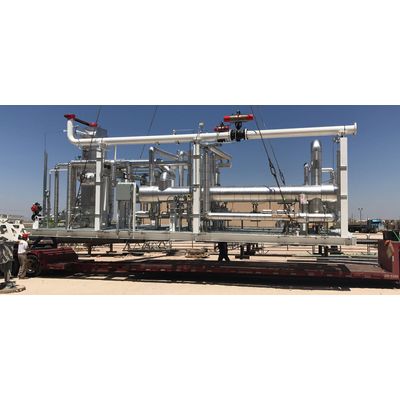
BCCK’s patented technologies play a vital role in high BTU landfill gas, digester biogas and renewable natural gas projects, contributing toward global efforts to reduce greenhouse gas emissions. BCCK’s specialized technologies are applicable to the treating and conditioning of renewable natural gas containing undesirable levels of nitrogen, carbon dioxide, oxygen, siloxanes and hydrogen sulfide. Our technologies minimize the hydrocarbon losses throughout the process, which is much higher recovery compared to membranes. There are specific requirements necessary to achieve a high BTU gas in order to meet pipeline specifications. BCCK has the capabilities to assist with inlet compression through sales gas to accomplish these requirements. For landfill and anaerobic digester owners, project developers and operators, applying BCCK’s technologies will offer significant benefits.
For landfill and digester projects where the objective is to convert biogas into power, BCCK applies the same design principles but with optimization that avoids unnecessary and costly gas processing that is required for a pipeline tariff condition while maintaining maximum methane recovery. Costly and inefficient field work is minimized via our modular design philosophy.
Through BCCK’s renewable natural gas technologies, landfill and digester owners, project developers and operators will produce the desired results set forth in the project development phase. As our society moves towards the reduction of overall carbon emissions, additional incentives will play a role in project economics. The BCCK team has extensive background in quantifying, certifying and trading of GHG Emission Reduction Credits.
In the U.S., the number of landfill gas capture projects is increasing significantly, adopted in large to minimize energy costs and reduce greenhouse gas emissions. Once the methane gas is collected and treated, it can be used for electricity generation or processed into pipeline quality natural gas by removing various contaminants and components and sold offsite. In this way, landfill gas is transformed into a renewable natural gas resource.
A landfill site that deposits a million tons of municipal solid waste (MSW) per year will produce enough methane over a 20-year period to power a 1 MW gas engine. The gas used for this power generation does not require the extensive cleanup that would be required for a pipeline specified product. This is because gas engines can resist the impurities that typically appear in landfills, creating a quality product referred to as low BTU (has a heating value between 90 and 200 BTU per cubic foot). Methane still has significant value to a landfill site operator as it allows them to harness electrical energy that can be sold to the grid or used for onsite power, all while reducing emissions.
BCCK’s engineering team can optimize your low or medium BTU landfill site with any gas composition, providing more efficient and sustainable technologies for scrubbing, dehydration, compressing and processing prior to generating electricity.
The system associated with gathering landfill gas operates in a vacuum, pulling in nitrogen and other contaminants from the atmosphere. Since nitrogen is inert, it is essential to remove it. Removing the nitrogen creates a high BTU gas, that becomes a more marketable and sellable natural gas which can be used for multiple applications.
Although the process of removing the nitrogen from landfill gas is not a new one, BCCK’s patented NiTech® NRU maximizes the gas quality while minimizing the horsepower, equipment and footprint required to achieve it, thus delivering more economical results for landfill gas plants across the United States.
- Reduce emissions of greenhouse gases that contribute to global climate change
- Offset the use of non-renewable resources
- Help improve local air quality
- Provide revenue for landfills and project developers
- Reduce energy costs by providing a renewable resources
- Create jobs and promote investment in the local economy