


Samsung SDI - Li-ion Battery for Garden Tool
No emission during operation. An engine-type garden tool emits toxic gases such as CO, HC, and NOx. However, an electrically-operated garden tool using a Li-ion battery is not harmful to the human body and the environment as it does not produce any emission.
Reduce noise remarkably
An engine-type garden tool generates sounds over 100dB and may cause hearing damage when used for over two hours. In contrast, a garden tool equipped with a Li-ion battery produces only 30-50 dB sound such that its user does not need to wear earplugs nor suffer from complaints from neighbors.
Improve convenience of maintenance
While an engine-type garden tool requires frequent oil change (every 15 hours on average) and regular maintenance, a garden tool with Li-ion battery is easy to use and is economical as it requires no replacement or maintenance/repair.
Smaller volume and weight
Since a Li-ion battery has about five times higher energy density compared to a lead-acid battery, a Li-ion battery with the same size and weight of a lead-acid battery has four- to five-times higher capacity and energy. As a result, a lighter, slimmer garden tool can be made with the same capacity and energy as a lead-acid battery-using garden tool.
Higher energy efficiency
A lead-acid battery uses only 60-80% of its capacity due to a high voltage drop when discharged. As a result, a lead-acid battery has a very low capacity efficiency compared to a Li-ion battery, which has stable discharge characteristics and is very efficient as it can use more than 97% of the capacity.
Longer battery life cycle
The life of a typical lead-acid battery is about 50% of a Li-ion battery with the same capacity, and about 70% for the high-end deep cycle type lead-acid battery. Therefore, the initial purchase price for a lead-acid battery may be lower than a Li-ion battery, but the total cost of ownership is much lower for a Li-ion battery since a lead-acid battery needs two replacements over five years while a Li-ion battery may be used continuously without replacement.
Shorter charging time
While lead-acid battery requires 10-15 hours to fully recharge, a Li-ion battery can be fully recharged within three hours on average and is more convenient for the user.
More eco-friendly battery
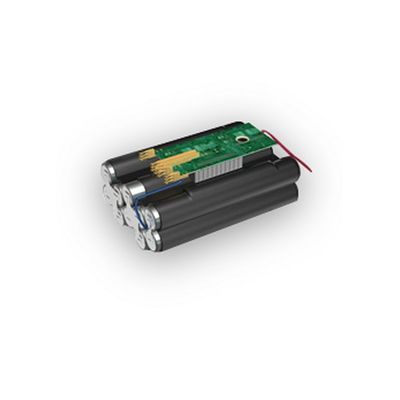
A Li-ion battery is an eco-friendly battery using no hazardous materials (e.g., Pb, Cd, Hg) or dangerous materials such as sulfuric acid (H2SO4) restricted for use under various environmental regulations.