


- Home
- Companies
- MEYER CD ApS
- Products
- Model HDRX-R450 - Regulator - Fuel Cell ...
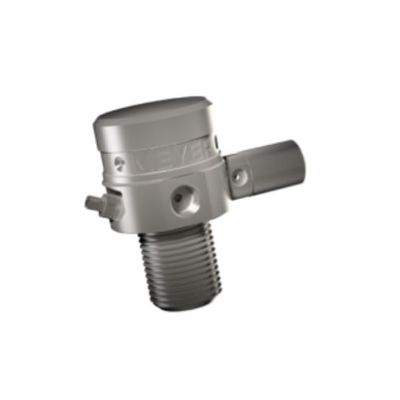
Model HDRX-R450 -Regulator - Fuel Cell Drone
When weight and trim is a critical consideration for your application, the HDRX-R450 is the perfect solution. Light and compact in design – made for now and future solutions. HDRX-R450 additionally offers full customization and direct mounting to the Hydrogen supply. The HDRX-R450 offers accurate control in a single- or two-stage pressure reduction. With an inlet pressure of 450 bar / 6,750 psi, you are prepared for todays and also for future solutions. MEYER® has developed a compact and lightweight single- & 2. stage pressure regulator for Hydrogen-powered UAV drone applications.
| Part Number | HDRX-R450 |
| Body Material | 316 Stainless Steel |
| Cylinder Connection | M18 x 1.5 (ask for other) |
| Output Connections | M8 x 1.25 (ask for other) |
| Maximum Inlet Pressure | 450 bar / 6,750 psi |
| Outlet Range | 0-10 bar (0 – 150 psi) |
| Fill Port | Installed |
| Port Configuration | Standard (ask for other) |
| Pressure Regulation | Single- or two-stage |
The safest means to reduce cylinder pressure to a workable level for Fuel Cell equipment and instruments is through a pressure reduction regulator.
Single-stage regulators reduce cylinder pressure to delivery or outlet pressure in one step.
Two-stage regulators reduce cylinder pressure in two steps. Since the performance of each regulator is determined by design, the choice depends on the requirements of the application.
The two most important variables to be considered are droop and supply pressure effect.
Droop is the difference in delivery pressure between zero flow conditions and the regulator’s maximum flow capacity. Supply pressure effect is the variation in delivery pressure as supply pressure decreases while the cylinder empties.
Single-stage and two-stage regulators have different droop characteristics and respond differently to changing supply pressure.
The single-stage regulator shows little droop with varying flow rates and can be a risk for low pressure components (eg. Fuell Cell), but a relatively large supply pressure effect and therefore output pressure can rise above Fuel Cell specifications.