

Plenesys
Model HyPlasma -Clean Hydrogen Production Units
FromPlenesys
Our process uses our patented plasma technology to separate the methane molecule into hydrogen and solid carbon allowing a clean production of hydrogen at competitive costs.
Most popular related searches
hydrogen production
plasma torches
plasma torch
plasma technology
pyrolysis process
clean energy
carbonization
pyrolysis
hydrogen separator
Methane pyrolysis
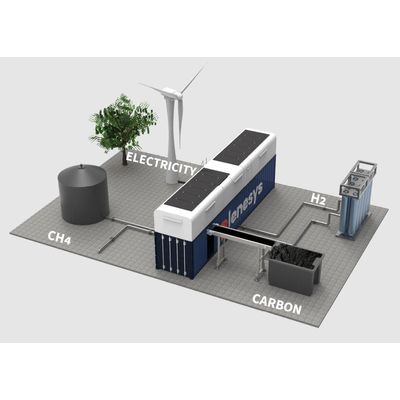
We use the power of our plasma torches to “crack” the methane molecules (CH4) separating clean hydrogen (H2) from carbon powder (Cs).
Plasma
Using plasma, there are no emissions of CO2 in the atmosphere. Only solid carbon powder is generated as a by-product which is valorizable in the market.
Decentralized and scalable
Our decentralized units are made with scalability in mind. The capacity of each unit can range from tens of tons to thousands of tons of hydrogen per year.
- The most dominant hydrogen production on the market today is Steam Methane Reforming (SMR). While hydrogen is thought to be a major player in the sustainable development and clean energy of tomorrow, SMR is a very polluting process. SMR uses natural gas (and water) as a feedstock, and more than 10 kg of CO2 are liberated in the atmosphere with each kg of H2 produced. Using this method is very discouraged if we want to produce climate friendly hydrogen.
- On the other hand, the most know clean alternative to SMR today is water electrolysis. This process uses water and electricity as feedstocks and produces hydrogen and oxygen. While the produced H2 is clean, electrolysis is an expensive process. The cost of each kg of H2 produced using this process can be as much as 6 times more expensive than SMR.
- HyPlasma is a methane pyrolysis process that uses (renewable) electricity and (bio)methane as feedstocks. On the contrary of SMR, HyPlasma does not produce any CO2 because it uses the clean heat generated by our plasma torches to crack the methane molecule (CH4) into hydrogen and solid carbon powder (a by-product that can be valorized on the market). HyPlasma uses also electricity, similarly to water electrolysis, but at the same scale of production, it uses 5 times less electricity than electrolysis, making the operational costs more than 50% cheaper than electrolysis, while competitive with the cheap operational costs of SMR.