


EKO-SYSTEMY Sp. z o.o.
- Home
- Companies
- EKO-SYSTEMY Sp. z o.o.
- Products
- EKO - Overground Gas Oil Tanks
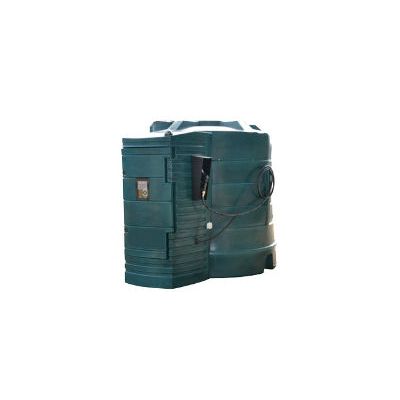
EKO - Overground Gas Oil Tanks
The Eko Fuel Tank device is intended for gas oil storage. It comprises a two-place overground tank, a batcher system and a control system. Volumes available: 2500 l, 3500 l, 5000 l and 9000 liters.
Most popular related searches
- Durability (corrosion-resistant).
- Easy to use which guarantees safe operation.
- Protection against access of unauthorized individuals (locks in the superstructure).
- Possibility of choosing the equipment of the batcher system and gas oil management system.
- Possibility to move the device according to the needs.
- Lower price of gas purchased in large quantities.
- Possibility of choosing a reliable gas supplier (low prices and good quality).
- Effective control over gas outcomings.
- 10 year warranty for the tank.
Polyethylene tanks are 100% recyclable, raw materials can be reused. Standard equipment:
- Batcher System:
- elastic 1" suction conduit with a reverse flow check valve and a sieve filter,
- digital flow meter showing the amount (number) of pumped oil,
- a 230V powered pump with an efficiency of 72l/min (56l/min and 90l/min are optional),
- a pistol with an automatic valve closing the supply of fuel,
- an elastic distribution conduit with a 1" diameters and 6m of length.
- Control System:
- Leakage sensor located between the jackets and the signaling system.
- Maximum level sensor which, after connecting the signaling system, switches of the pump or signals that the tank is full.
- A system for signaling the amount of fuel in the OCIO tank (10cm scale, protection against dry cycles),
- Vent in the internal tank.
- Inspection cover in the internal tank with a diameter of 4 inches.
- A 2-inch inlet connected to a coupling located at the end of locks (a ball valve together with a eurolock, camlock or a dry lock).
- Inspection cover in the external 16"cover.
- Batcher enclosure equipped in a lock with keys.
- Earthing to the outside of the batcher enclosure.