


- Home
- Companies
- Dongguan City Gonghe Electronics Co., ...
- Products
- Portable 7.2Wh Super Capacitor Pack , ...
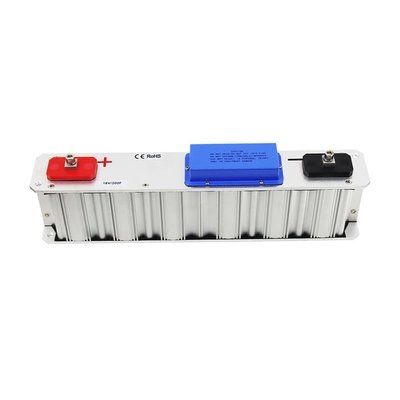
Portable 7.2Wh Super Capacitor Pack , 200 Farad Capacitor Module
Capacitance: 200F. Type: Super Capacitor Bank. ESR (Equivalent Series Resistance): 3.7 MΩ. Operating Temperature: -40°C ~ 70°C. Certificate: RoHS/CE/ISO9001. Cycle Life: More Than 20000times. Warranty: 3 Years. Package: Cartons,Wooden Box Packing. Application: General Purpose, Power, Automotive, AC / Motor. Size / Dimension: 417*68*122mm. Shipment Method: By Sea And By Air. Capacitance Tolerance: 20%or+20%. High Light: Portable Super Capacitor Pack, 7.2Wh Super Capacitor Pack, 200 Farad Capacitor Module.
Model number: GHT16V200FL
Place of origin: Guangdong,Cn
Product name: Super capacitor module/super capacitor pack
weight: 3.5 kg
Working temperature: -40~65?.
ESR: 3.7 mΩ
Leakage current Less than 3.5mA
Charging and discharging time More then 20000 times
Application Energy storage/transportation car power/motor start /car start etc
Storage energy: 7.2 wh
Maximum continuous current 100A
Leakage current: 3.5 mA
MOQ: 2 Cet
Specification 16v 200f
SIZE: 417*68*122(Two sizes with different length, width and height)
Supercapacitors are already used to rapidly charge the power supplies in hybrid buses as they go from stop to stop. Currently, such chargers aren’t commercially viable to deliver on a mass scale, but as more people buy electric cars the charging infrastructure is likely to develop to a point that widespread supercapacitor chargers become a reality.
But electric car systems, batteries, charging and tech are improving all the time, so the scope for supercapacitors to amp up future EVs is electrifying.