

- Home
- Companies
- Echogen Power Systems
- Products
- EPS - PTES System
EPS - PTES System
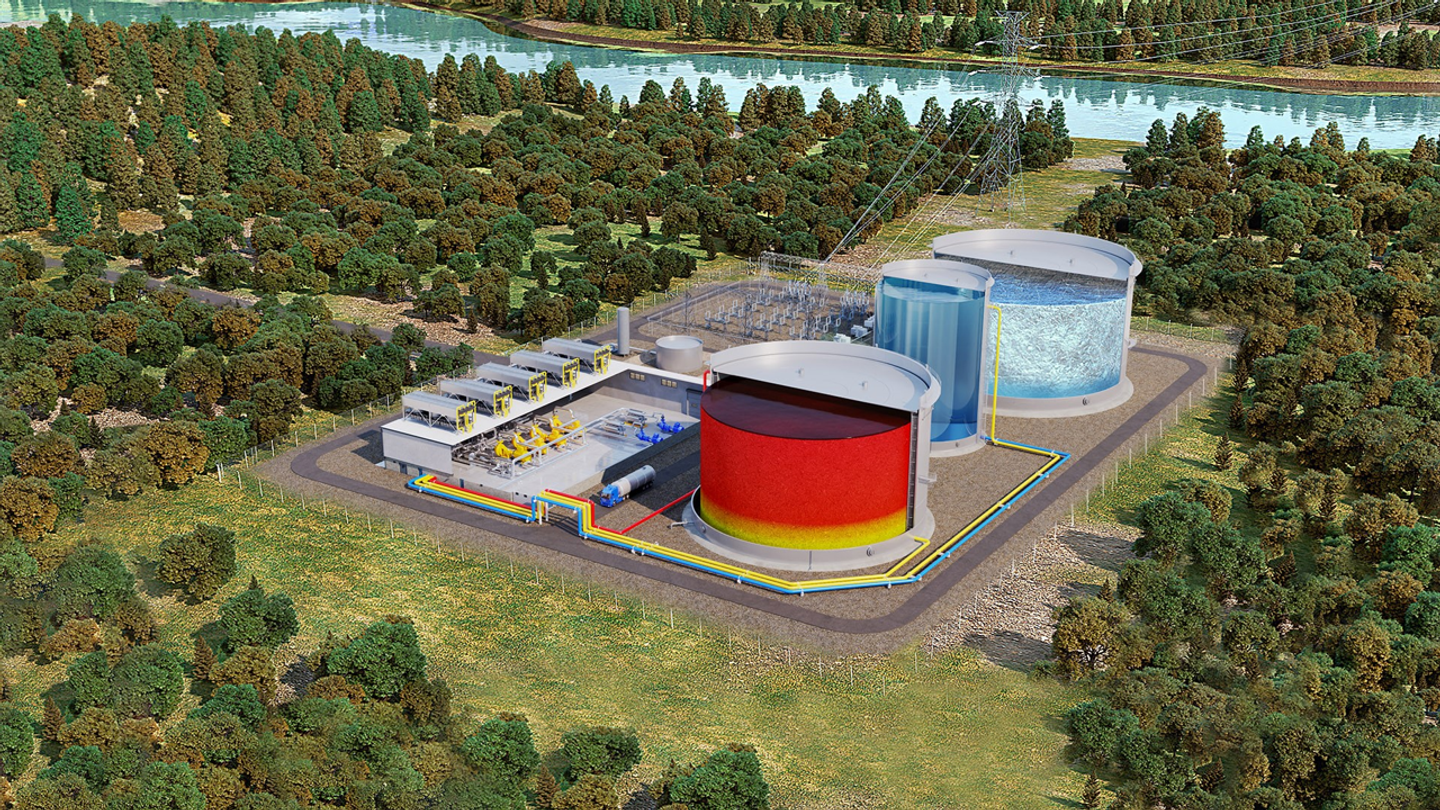
Echogen’s solution turns thermal energy into electricity, using sand as the storage medium. The process involves using a carbon dioxide heat pump cycle to convert electricity into thermal energy by heating the sand-based reservoir, which is then converted back into electricity on demand.
Charging cycle
- Heat pump (refrigeration) cycle
- Uses electrical power to move heat from a cold reservoir to a hot reservoir
- Creates stored energy as both “heat” and “cold”
Generating cycle
- Heat engine (power) cycle
- Uses heat stored in hot reservoir to generate electrical power
- “Cold” energy improves performance of heat engine
Electro-thermal energy storage (ETES) offers key advantages over other advancing technologies. For example, Chemical battery solutions have limitations (cost, performance, cycles, materials, environmental, health & safety, degradation, etc.) which are exacerbated as storage duration requirements lengthen.
KEY ADVANTAGES
- Low capital cost
- No augmentation costs
- Higher projected reliability
- Low environmental impact
CAPITAL COST AND LCOS
ETES capital cost and levelized cost of storage (LCOS) compares very favorably versus li-ion battery systems, with increasing advantage as storage time increases above 6 hours.
ENVIRONMENTALLY FRIENDLY
Echogen ETES sand and concrete storage materials are relatively benign to operate and dispose of. This is a contrast to the many metal chemistries of fixed and flow electrolyte batteries, as well as more exotic storage materials of other ETES systems. Thus, the Echogen ETES system maintains a low environmental footprint through its value chain.
WHY CO2?
- CO2 is the best fluid for ETES, providing high-performance, low cost and low impact
- Charging: CO2 is one of the first heat pump fluids ever used (charging cycle), and condenses near 0°C
- Generating: CO2 power cycles are commercially available today
- CO2 properties allow for high round-trip efficiency (> 60%) while using low-cost materials
Once commercial, applications for long duration storage on renewable-driven conventional grids include:
- Pairing with wind and solar – for high capacity factor power plants
- Stand-alone storage – to defer investment in new transmission (larger scale) and new distribution (smaller scale) due to changes in power supply and demand locations
- Islanded power grids – to lower power costs and provide back-up power, eliminating high cost diesel and LNG fuels
Distributed generation and new power grid market models at the “grid edge” are evolving and will be enabled by
longer duration storage. Such examples are:
- Green residential/commercial microgrids – these are driven by supplying economic demand reduction to the grid using local renewable generation and the need for resilient back-up power from major grid threats such as weather and terrorism
- Industrial microgrids – similar drivers as above with heating/cooling opportunities using thermal storage systems.
- Datacenters – storage to use 100% contracted renewable power and replace fossil-fueled genset backup power