


- Home
- Companies
- Anyang Lishi Industrial Co., Ltd
- Products
- Anyang Lishi - Silicon Carbide
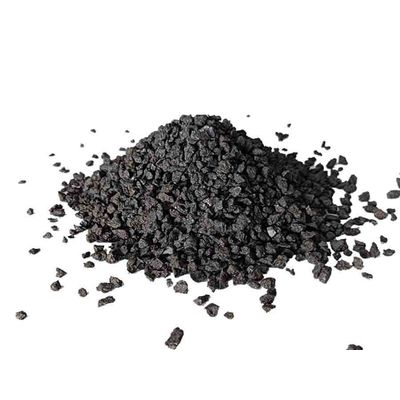
Anyang Lishi - Silicon Carbide
Silicon carbide (SiC), also known as carborundum, is a hard chemical compound containing silicon and carbon, is a new type of strong composite deoxidizer, which replaces the traditional silicon carbon powder for deoxidation, compared with the original process, the physical and chemical properties are more stable, and the deoxidation effect is good. SiC is usually produced in a resistance furnace at high temperatures of 1700 – 2500 °C. Silicon carbide has been an important material in sandpaper, grinding wheels, and cutting tools since the late 19th century. In recent years, it has found applications in refractory linings and heating elements for industrial furnaces, wear-resistant parts for pumps and rocket engines, and semiconductor substrates for light-emitting diodes.
SiC is a product formed by a chemical reaction of a carbon material mixed with silicon dioxide or quartz sand, which develops as a solid cylindrical ingot around the core, with radial layers ranging from graphite on the inside to α-SiC (the highest-grade material with coarse crystalline structure), β-SiC, metallurgical grade and finally un-reacted material on the outside, which is remelted. SiC can be produced in either black or green, depending on the raw materials used.
Black silicon carbide (SiC) contains more than 95%, and its toughness is higher than that of green silicon carbide. It is mostly used for processing materials with low tensile strength, such as glass, ceramics, stone, refractory materials, cast iron, and non-ferrous metals.
Green silicon carbide contains more than 97% SiC, is green in color, has higher hardness and brittleness than TH, and has good thermal conductivity and electrical conductivity. steel knives.
In addition, there is cubic silicon carbide, which is a yellow-green crystal produced by a special process. The abrasive tools used to make it are suitable for the superfinishing of bearings. The surface roughness can be processed from Ra32-0.16 microns to Ra0.04- 0.02 microns.
After cooling, the SiC ingots are accurately sorted, mostly manually by skilled workers, and further processed for different applications. The solid SiC material is then carefully crushed, and sorted, if necessary, ground again. Another option is to further chemically treat SiC to obtain specific properties for its application.
We sell SiC in the shape of blocks, granules, and powder.
Packaging: Delivering in water-proof plastic woven bag, 1000kg per bag or as your requirements.
Size: 0-5mm, 0-10mm, 10-50mm, can also provide custom.
- Low density
- High strength
- Good high-temperature strength (reaction bonded)
- Oxidation resistance (reaction bonded)
- Excellent thermal shock resistance
- High hardness and wear resistance
- Excellent chemical resistance
- Low thermal expansion and high thermal conductivity
Non-ferrous metal smelting
Utilizing the high humidity resistance, good thermal conductivity, impact resistance, and high strength of silicon carbide, it can obtain better results by indirect heating of materials at high temperatures. Such as the lining of the copper melting furnace, a distillation furnace tray, a zinc powder furnace arc plate, an aluminum electrolytic cell, etc.
Metallurgical mineral processing industry
The hardness of moissanite is actually second only to diamond, and it has strong wear resistance, which is more than 5 times the service life of cast iron and rubber. It is also an ideal material for aviation runways.
Building materials ceramics and grinding wheel industry
Utilizing the characteristics of high-temperature resistance and high heat conduction system of moissanite, thin-plate kiln furniture can be manufactured, which can not only increase the capacity of kiln furniture, but also greatly improve the product quality of the kiln, and help shorten the production cycle. Silicon carbide can be said to be a ceramic glaze. Ideal indirect material for baking and sintering.
Energy saving
With good stability and thermal conductivity, it can be used as a heat exchanger, reducing fuel consumption by more than 20% for enterprises, and can also greatly increase productivity. It is also very suitable to be placed inside the discharge pipeline used in the mine dressing plant.
Applications in new fields
In recent years, the technology research and development of silicon carbide has shown an accelerated trend. For example, the solar photovoltaic industry is in a period of rapid growth, and crystalline silicon batteries also occupy a certain position in the market share. It is used for the development of power generation efficiency in battery technology. At present, It is also a market trend.
In the future, the main application of silicon carbide may also be concentrated in the fields of circuit components, semiconductors, structural materials, clutches, nuclear fuels, and cutting tools. And with the improvement of recycling technology, it is also possible to realize the recycling of some finished products.