


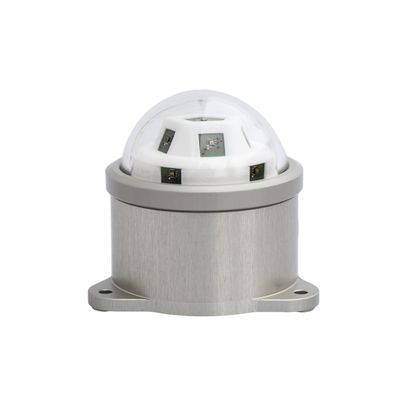
Sunto - All-out Solar Irradiance Sensor
It is a breakthrough sensing device that measures Global Normal, Direct Normal and Diffuse Horizontal solar Irradiance without sun trackers or other moving parts.
Solar radiation monitoring made simple, accurate, affordable!
- One single CaptPro++ replaces a pyranometer, a pyrheliometer, an albedometer, a spectroradiometer, and a mono-axial tracker controller without the need for a solar tracker
- Small, rugged, portable and ligthweigth
- Extremely easy to install and to maintain
- Polar alignment and tilt-plane independent (only CaptPro version)
- Usable under any weather conditions
- Natively designed to be configured in wireless distributed sensing networks delivering highly accurate solar radiation assessment and no need for routine calibration
In its more advanced version, its game-changing design and proprietary algorithm summarizes in a single self-standing device the outputs of a pyranometer, a pyrheliometer, an albedometer, a spectroradiometer and a monoaxial tracker controller while eliminating the need for extra equipment, such as solar trackers.
It also calculates the Optimal Inclination of the tracked PV panel, the Maximum Irradiance Angle based on the current measurements of direct and diffuse irradiance. It also delivers measurements of the Global Horizontal, the Direct Beam Horizontal, the Global Tilted Irradiance, spectral-weighted on the PV panel technology too, the Ground Reflected Irradiance, the Reflected Tilted Irradiance, and all solar radiation components divided in four different spectral bands (IR, Red Green, Blue).
By dramatically boosting the fine-grained localization of system failures, inefficiencies and production drops with unmatched, pin-point detail, All-out Solar Radiation Sensor allows to maximize energy production, reduce O&M costs, and to increase profitability for investors, owners, and managers of PV plants.
At a cost sensibly lower than a single monitoring station featuring pyranometers, pyrheliometers and sun trackers, and with dramatically lower maintenance cost, a wireless network of All-out Solar Radiation Sensor nodes provides +300% more accurate information about plant performance, 10x more precise localization of faults, and the detection of production drops of the order of 1%, thus enabling an increase of up to +5% in energy yield.