


- Home
- Companies
- Convectronics
- Products
- Convectronics - Tubular Electric ...
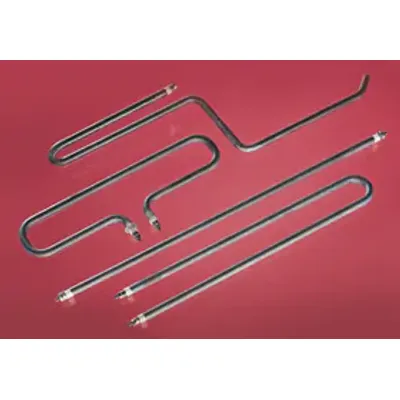
Convectronics - Tubular Electric Heaters for Industrial Use
Convectronics' Tubular Electric Heaters are engineered for versatility and durability with the capability of being shaped into various configurations suitable for a myriad of industrial applications. They incorporate a helical coil of nickel-chromium resistance wire, centered in a metal sheath filled with magnesium oxide powder, ensuring even density and precise coil positioning. This construction supports a broad range of materials, sizes, and terminations, making them adaptable for environments requiring rugged and efficient heating solutions. Common sheath materials include Incoloy, stainless steel, steel, and copper, each selected based on specific chemical compatibility and temperature requirements. These heaters are applicable in air, radiant, and water heating, as well as in cleaning and degreasing solutions, making them suitable for sectors such as food processing, oil immersion, and more.
Convectronics’ Tubular Electric Heaters, with their unique and durable construction, are extremely versatile as they can be formed into nearly any configuration. With the broad selection of materials and terminations, combined with a wide range of ratings and sizes, Convectronics’ Tubular Electric Heaters are extremely adaptable to a wide range of industrial, scientific, and commercial applications.
Our heater design consists of a helical coil of nickel-chromium resistance wire that is precisely centered in a metal sheath. Vibration loaded magnesium oxide powder is added into the sheath, insuring even density distribution throughout its length. The entire assembly is then reduced to its finished diameter, therefore compacting the MgO, ensuring that the coil maintains its precise centering in the heater. Lastly, the sheath can be fully annealed for factory or field bending.
Sheath Material
Sheath material selection should be made based on the chemical composition of the solution being heated, the classification of the materials entering the solution, the application and the process controls used. Common sheath materials used are:
Incoloy®800: Resistant to high temperature oxidation and carburization
Common Uses: Air Heating, Radiant Heating, Cleaning & Degreasing Solutions, Plating Solutions & Corrosive Liquids
Stainless Steel: Types 304, 316 and 321
Common Uses: Food Processing Equipment & Corrosive Liquids
Steel: Low carbon, mid-range temperature applications
Common Uses: Oil Immersion, Alkaline Cleaning Solutions, Asphalt & Tar
Copper: Inexpensive alternative for low temperature applications
Common Uses: Water Heating & Freeze Protection