


- Home
- Companies
- The Hoskinson Group, LLC
- Products
- Hoskinson - Waste-to-Energy Power Plant

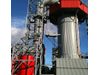

Hoskinson - Waste-to-Energy Power Plant
For over 50 years, our Waste-to-Energy power plant has been designed to convert many types of waste into a source of stable and continuous electricity for homes and businesses while positively benefiting the environment, the economy, our society and the future of our planet.
Our solution stands out by offering a scalable, community-focused, and environmentally conscious waste management approach that addresses the limitations of traditional mass-burn incineration, especially for smaller-scale waste disposal needs.
Hoskinson’s solution emphasizes utilizing advanced mechanisms to control emissions, incorporating innovative technologies to minimize pollutants, and ultimately achieving a cleaner oxidation process that outperforms traditional mass-burn incinerators.
Hoskinson’s fully integrated Waste-to-Energy (WtE) operations change this status quo dramatically, where waste- such as forestry, agricultural, industrial, and just about any other waste with a thermal value- can be used as fuel to generate clean and responsible power for thousands of homes and businesses for generations to come. The entire Facility operates 24-7 with minimal downtime for maintenance. The system is modular and scalable by design. The process of producing electricity from waste is comprised of four major steps:
Waste Receiving and Conditioning
The process begins after the garbage truck is weighed. The contents are dumped into the recycling operations section of the WtE Facility, where large or hazardous items are removed for recycling and proper disposal.
The balance of the material is then shredded and processed through a combination of automated separating and recycling machinery and manual labor stationed along a series of conveyor belts, which obtain both RDF (Refuse Derived Fuel) material and recyclable material. This part of the process removes much of the metals, glass, and other non-combustible materials and objects inappropriate for introduction into the gasification chamber of the WtE plant.
Recycled material is packaged and prepared for shipment out of the Facility at regular intervals.
The remaining waste is then stored in a staging area inside the building, where it is prepared for the WtE plant. The RDF is continuously and automatically loaded into the augers that introduce the waste into the main primary Pyrolytic Gasification chamber.
Syngas Creation
The waste is gasified in the primary chamber into a synthetic gas or “syngas” that contains a highly combustible mixture of primarily CO, H2, and other hydrocarbons. The waste continuously moves to the rear of the primary chamber until it is consumed. The primary chamber operates in an oxygen-starved or substoichiometric environment that minimizes oxidation of the syngas at this point.
Syngas Oxidation
The syngas then move from the top of the primary chamber to the secondary chamber, where an additional regulated amount of air is added to the syngas flow. While the syngas could be cleaned at this point and introduced into conventional combustion engines, the syngas is oxidized in the secondary chamber more efficiently, where temperatures may approach 2,300°F. This is where additional thermal oxidation reactions occur, with trace amounts of super-heated steam in the waste. This highly exothermic reaction generates a tremendous amount of heat captured by integrated boiler tubes.
Power Production
These boiler tubes generate superheated steam under moderate pressures and temperatures. This steam is regulated and introduced into the turbine/generator set, which spins and creates the electric current.
The exhaust steam is condensed and reintroduced into the boilers for reheating. The condenser, generator, and other parts of the plant are often air-cooled, substantially reducing the amount of water the Facility needs to operate.
It is required to specify the necessary components to meet or exceed the air quality standards of either the USEPA or the EU for a plant of this type and scale.
The exhaust gas from the secondary chamber then enters the air quality control system (AQC system). The collecting module uses state-of-the-art catalytic ceramic filter elements with infused nano-sized catalysts for substantial NOx reduction and removing other substances that may be present, such as mercury, acid gases, particulate matter, and trace amounts of dioxin/furans. Most of the acid gas present is in the form of HCl reduction. Methane captured by the existing landfill and/or other volatile gases that would otherwise spew into the atmosphere can also be piped into The Hoskinson WtE plant and used as auxiliary fuel.
The Hoskinson "Waste to Energy" facility delivers extensive advantages across various aspects of life, spanning environmental, financial, societal, economic, governmental, and more, creating a positive impact for current and future generations.
The Hoskinson plant plays a crucial role in sustainable waste management by reducing and potentially eliminating the amount of municipal solid waste (MSW) in landfills. This, in turn, helps to minimize the negative impact of waste on the environment and contributes to the reduction of greenhouse gas emissions associated with the decomposition of waste in landfills by converting waste into energy.
Achieving sustainable business finances without relying on public resources or subsidies is crucial. A Hoskinson plant stands out as it carries 100% financing and offers multiple ways to generate sufficient income without any dependence on public resources.
To achieve a healthy financial balance, the plant can leverage various income-generating mechanisms such as the sale of electrical energy, charging per ton of MSW received for processing, selling recyclable materials, generating and selling refuse-derived fuel for other thermal processes for production, carbon credits, carbon capture credits, and generating and selling hydrogen.
The construction and operation of the plant will lead to the creation of both temporary and permanent jobs, contributing to the local economy. Additionally, reducing the amount of waste sent to landfills can minimize harmful gases associated with waste decomposition, thus improving air quality.
Furthermore, the Hoskinson plant provides a social return through financial resources, which, in coordination with local authorities, directly benefit the communities. For example, guided visits to the plant are offered to school-aged children, young people, and interested professionals to foster a sense of belonging and establish a connection between the communities and the Hoskinson plant. It also creates opportunities to paint school facilities, plant trees, etc.
The implementation of a Hoskinson plant effectively mitigates the negative impacts of sanitary landfills and open-air dumps that emit greenhouse gases (GHG), particularly methane gas, which is known to be 80 times more harmful to the ozone layer than carbon dioxide.
In addition to contaminating groundwater, surface water bodies, rivers, and the sea with leachates, exposure to GHGs from landfills can lead to various health risks, such as respiratory conditions, damage to the central nervous system, and even cancer. With a Hoskinson plant, harmful fauna is prevented from forming, as the plant processes the Municipal Solid Waste (MSW) as soon as it arrives and stores it in a closed, ventilated, and dry space until it is fully processed.
The circular economy model advocates rescuing valuable recyclable materials from municipal solid waste and returning them to the industry. Additionally, waste can be converted into electrical energy by recovering its caloric energy, contributing to energy recovery efforts.
The construction and operation of waste management plants can also act as an economic stimulus, creating new investments and employment opportunities.
Investing in a waste-to-energy (WtE) plant can save and redirect public resources towards other initiatives. Furthermore, taxes generated by the plant can provide an additional source of income for the city.
In addition to the economic benefits, implementing sustainable technologies, like WtE, demonstrates a commitment to responsible waste management and can improve the overall image of the local authorities and the city.
By embracing sustainable environmental practices, companies can bolster their reputation and improve their standing in terms of corporate social responsibility.
Moreover, investing in a plant that promotes emissions reduction can help ensure regulatory compliance with environmental standards.
The future belongs to those who strive to leave our planet in better condition. For this reason, Hoskinson, through adopting environmental and sustainability practices, seeks to reinforce its corporate social responsibility and impact in the broadest way possible, in compliance with environmental regulations, with the reduction of its carbon footprint and that of our associates or beneficiaries.