


- Home
- Companies
- Building Compliance Testing Limited
- Services
- Heat Loss Survey Service
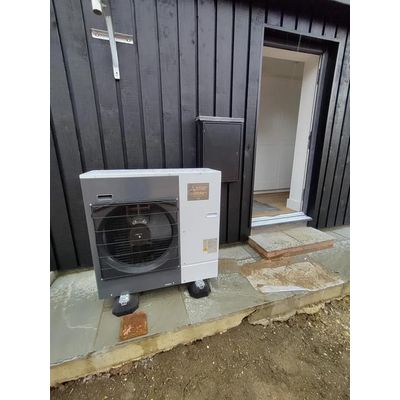
Heat Loss Survey Service
A heat loss survey is an inspection process used to identify areas where heat is escaping from a building. This survey is conducted to improve energy efficiency, reduce heating costs, and enhance comfort levels within the building. A heat loss survey is a critical part of assessment and sizing of heating systems such as low temperature heat pumps, boilers and their emitters (i.e. radiator placement and sizing).
In the labyrinth of modern heating technology, finding the right fit for your home can feel like solving a complex puzzle. The heating industry, it seems, has veered off course, leaving homeowners and installers alike scratching their heads over the perplexing question: “What size heat pump or boiler do I need?”
Years of progress in insulation have outpaced the evolution of sizing guidelines, resulting in a landscape littered with mismatched boilers and heat pumps. The tendency to replace old units with ones of identical power input overlooks the efficiency gains of modern systems, leaving homes either under or over-equipped for their heating needs.
Enter the era of combination boilers, where bigger became synonymous with better. Manufacturers fuelled this misconception by suggesting boiler sizes based on generalized property classifications, failing to acknowledge the nuanced heat loss dynamics of individual homes.
At Building Compliance Testing, we’ve revolutionised the approach to heat pump installations with our meticulous Room-by-Room (RBR) Heat Loss Calculations (HLC). Pioneered in 2011 by the esteemed Microgeneration Certification Scheme (MCS), our method sets the gold standard for precision and efficiency in heating technology.
Gone are the days of one-size-fits-all solutions. Our RBR HLC process takes into account the unique characteristics of each room, meticulously analyzing factors such as insulation quality, window dimensions, and radiator efficiency. This level of detail ensures that your heat pump is perfectly tailored to your home’s specific heating requirements.
Why settle for guesswork when you can have certainty? With Building Compliance Testing, you can trust that your heat pump installation is backed by rigorous analysis and expert knowledge. Say goodbye to the confusion of outdated sizing guidelines and embrace a new era of precision heating solutions.
The methodology behind the Heat Loss Calculation, carried out by Building Compliance Testing is set under the British Standard EN12831 as determined by the Chartered Institute of Building Services Engineers (CIBSE).
Under the requirements of Part L 2021, it is a requirement that for all new build domestic properties central heating flow temperatures can not exceed 55 degree Celsius. For those properties that have individual room-by-room heat losses calculated, it ensures correctly sized heat emitters such as underfloor and convection radiators.
The overall heat loss from a building can be calculated using the formula:
H=Ht+Hv+Hi
where:
- H is the overall heat loss,
- Ht is the heat loss due to transmission through walls, windows, doors, floors, and more,
- Hv is the heat loss caused by ventilation, and
- Hi is the heat loss caused by infiltration
The heat loss due to transmission can be calculated as:
Ht=A⋅U⋅(ti−to)
where:
- A is the area of the exposed surface,
- U is the overall heat transmission coefficient, and
- ti and to are the inside and outside air temperatures, respectively
The Microgeneration Certification Scheme (MCS) is a nationally recognized quality assurance scheme in the UK. MCS certifies both products and installation companies to ensure the microgeneration products are installed to a high standard5.
MCS-accredited companies must conform to rigorous quality and safety standards and meet Office of Fair Trading (OFT) requirements6. For heat pump installations, MCS requires that heat load calculations should comply with BS EN 128314.
Building Compliance Testing for residential surveying and the calculation of building heat loss are essential aspects of ensuring the safety, energy efficiency, and environmental protection of buildings. Compliance with standards such as BS EN 12831 and adherence to guidelines set by organizations like CIBSE and MCS are crucial in achieving these objectives. By understanding and applying these principles, we can create safer, more efficient, and more sustainable buildings for the future.