


HRS Heat Exchangers Ltd. articles
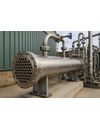
Gas cooler designs for exhaust-gas heat recovery and biogas dehumidification vary, but many service highly corrosive gas mixtures. Material selection and system design determine whether equipment will meet expected longevity and performance in these conditions.
Exhaust gas heat recovery is now common across industries, delivering cost savings and environmental benefits. With as much as 35% of an engine’s fuel wasted as exhaust heat, substantial value can be realized from heat exchange
The coconut tree (Cocos nucifera) is one of the world’s most versatile and valuable plant species. Capable of producing food, fuel, cosmetics, building materials, growing media and cosmetic compounds, it’s no wonder that in the Philippines, the coconut is known as the Tree of Life. The global market for coconut products is predicted to reach $53.4 billion by 2033, thanks to annual growth rates of around
Francisco Hernández Ortiz
The first few months of 2025 have been among the most economically turbulent in recent history, but despite this there are still signs anaerobic digestion (AD) will continue to play a key role in boosting energy security, tackling climate change, and managing organic wastes.
The global biogas market was estimated to be worth USD 65.53 billion in 2024 and is projected to expand 4.2% per year between 2025 and 20321. To help ensure that this growth is delivere
Matt Hale
Heat exchangers are commonly used for a wide range of purposes in the anaerobic and biogas sector, from digester heating and pasteurisation to evaporation, biogas dehumidification and exhaust gas heat recovery. With a wide range of types and designs available from numerous man
Matt Hale

All but the most basic heat exchangers are created to a bespoke brief, designed to take into account the material/s being heated or cooled, the heating or cooling medium, the amount of product being processed, product velocity, risk of fouling and a host of other factors. However, over the years some standard design types have emerged (as well as more specific types) and understanding the differences between these can make the specification process less of a mystery.
In this article,
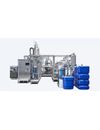
HRS is well known as a leading supplier of heat exchange, but our clients are increasingly looking for turnkey solutions for their thermal processing challenges. In response to this, HRS has a team solely dedicated to the development of complete systems, which account for more than half our total sales by value.
In terms of volume, component orders remain our core business; however, the number of full systems we are commissioned to produce is increasing every year and
HRS Heat Exchangers has supplied a leading Mexican orange juice producer with a complete pasteurisation system that uses a novel electrical heating method – Ohmic. The new system maintains the properties of freshly squeezed juice, which are adversely affected during traditional pasteurisation processes, allowing the company to increase its presences in the lucrative North American ‘as fresh’ juice market.
Pasteurisation
High Temperature Short Time (HTST) pasteurisation, also known as ‘flash pasteurisation’, is the preferred technique for making premium quality juice. The HRS series of MI/
Matt Hale
While heat treatment is important in ensuring the safety of apple juice through pasteurisation or sterilisation, for some products heat plays an important role in the production process itself.
The physical and chemical properties must be considered when they are juiced and processed. Sugar content is typically around 11%, while dry matters vary between 13 and 20 % depending on variety and growing conditions.
In order to produce a high-quality product, it is necessary that the
Matt Hale
AHED (Advanced Heat Exchanger Design) is a powerful design tool for the calculation of one of the most used items of process equipment: shell and tube and heat exchangers (STHE’s).
STHE’s are used in widespread process industries including Chemical, Oil & Gas, Wastewater, Food, Pharmaceutical & Automotive. The design of STHE’s is fundamental for a process installation to work to its optimum. It is vital that heat e
Matt Hale