


- Home
- Companies
- AEET Energy Group GmbH
- Products
- AEET - Photovoltaic Solar Module

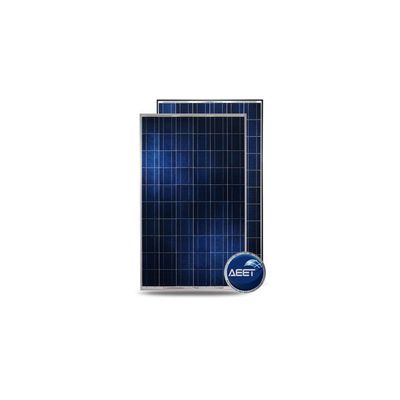
AEET - Photovoltaic Solar Module
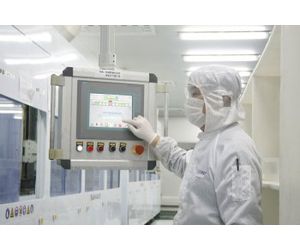
We are a producer of photovoltaic modules, which operates worldwide. Several of our production sites are located in China. We are distinguished by the industry-leading technology, the world-class supply chain around the globe and high quality workmanship. To achieve the best possible quality, all modules are measured and tested several times during and after completion of the production process. For the production of the solar modules we use only high quality machines. These are not only from Japan, but also from the US and Europe. Through our top quality, which we proudly represent, we provide numerous jobs in all industry sectors.
Since often no standard sizes can be used when mounting solar modules, we manufacture all systems individually. Each project is planned and implemented individually. We build custom-made and can therefore offer our customers special dimensions and special shapes. Models for closing gaps or dummies are precisely adapted and manufactured according to the wishes of the customer. We plan and produce a solar system with exact dimensions that covers the entire roof.
Our customers are very happy to get an insight into the production, because we place great value on transparency, as well as on the top quality of our products.
The AEET Energy Group GmbH produces individually according to the customer`s request:
- Wattage
- Kind of Cells
- Number of cells
- Cell size
- Backsheet in the colors transparent, white and black
- Various frames for mounting (aluminum - bright or powder coated)
- Without frames
- Individual carrier material (z.B. HGL = hard glass laminate) or construction in the classical manner
The generation of electrical energy from sunlight is already a mature technology today. With a photovoltaic system that can be conveniently mounted on the house roof, a four-person household can cover its entire energy needs. The fees specified in the Renewable Energies Act mean that the operator of a photovoltaic system usually has to refinance the investment after fifteen years at the latest. There is no better profit guarantee.
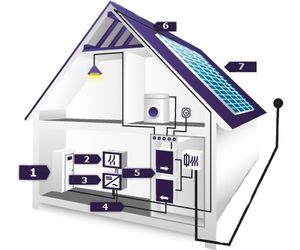
The core of every photovoltaic system is the solar modules. The solar cells contained in them absorb the sunlight and generate a DC voltage, which leads to the overall performance of the module. In order to be able to use the electricity generated by the photovoltaic system for the use and in the feed into the public grid, it is switched in the inverter to inverter to AC voltage. A feed-in meter can be used to measure exactly how much electricity the producer is feeding into the public grid. Remuneration is paid by the energy supplier according to the prices set out in the EEG. Normally, the extracted and the injected energy volume are compared to this and the operator of the photovoltaic system receives the excess amount.
1. Solar storage (optional)
2. DC disconnector
3. inverter
4. AC feed
5. fuse box
6. DC Cable
7. solar Panels
The core of every photovoltaic system is the solar modules. The solar cells contained in them absorb the sunlight and generate a DC voltage, which leads to the overall performance of the module. In order to be able to use the electricity generated by the photovoltaic system for the use and in the feed into the public grid, it is switched in the inverter to inverter to AC voltage. A feed-in meter can be used to measure exactly how much electricity the producer is feeding into the public grid. Remuneration is paid by the energy supplier according to the prices set out in the EEG. Normally, the extracted and the injected energy volume are compared to this and the operator of the photovoltaic system receives the excess amount.
Technical concerns need not be interested. A photovoltaic system is already delivered as a complete set and is even self-installable for a home improvement. Of course, the electrical connections must be laid by a state-certified electrician. But otherwise, the help of professionals is always the better way. Specialists such as the AEET Energy Group not only supply a photovoltaic system according to the wishes of the interested party, but also take over the entire process from plant design to commissioning. The right balance of demand and power production, available area, module tilt angle, resistance to external influences and photovoltaic system insurance coverage are important points contributing to the efficiency of solar power generation. If all the parameters for the photovoltaic system were planned in advance, the solar energy can also be used optimally.
In a photovoltaic system, environmental protection and financial gain go hand in hand. The absolutely emission-free generation of electricity by a photovoltaic system is the best alternative to the fossil fuels, whose processing is accompanied by a high degree of carbon dioxide emissions. The operator of a photovoltaic system is independent of the ever-increasing electricity prices. Due to the statutory feed-in prices, the system finances itself. In addition, it works for many more years only for the profit of the operator. At the AEET Energy Group, for example, a performance guarantee over 25 years.
Globally, environmentally friendly electricity from solar energy is the most important source of energy in the future.
According to the German Advisory Council on Global Change (WBGU), all traditional energy sources such as coal and oil will lose their importance in the near future.
As early as 2050, solar power will make a significant contribution to world-wide energy consumption, with a potential of 24 percent.
Another 50 years later, in 2100, the share of solar power in global energy production is already 63 percent.
If all south-facing roof surfaces in Europe were used for the production of solar power, even such a large economic area as the entire European Union could easily be supplied with 100 percent solar power. Start this gigantic trend reversal together with us!
For a better overview we have the main five advantages summarized for you.
Photovoltaic systems work without noise and emissions
Photovoltaic convinces with maximum flexibility and the complete absence of all emissions. While the plant produces environmentally friendly electricity, there are no emissions. Likewise, there is neither the formation of noise emissions nor the emergence of a shadow. Thus, the photovoltaic has significant advantages over the energy production by wind energy.
Photovoltaic systems are basically maintenance-free
Once a photovoltaic system has been installed, it basically works without ongoing maintenance work and reliably supplies environmentally friendly energy. Of course, a regular review of the entire system increases their life expectancy and optimizes energy production. Ideally, the photovoltaic system is additionally covered by the respective household insurance.
Photovoltaic systems pay for themselves within about ten years
In recent years, the investment costs for photovoltaic systems have fallen sharply. Technical improvements and subsidies from the public sector have also caused private PV plants to pay off after around ten years. The electricity produced after that is practically free and can, inter alia, be profitably fed into the public grid.
Photovoltaic systems save a large amount of energy
Initially, the production of photovoltaic modules is associated with a high energy consumption. However, the finished photovoltaic system already completed this initial energy for the production of the modules after only 10 years of operation. The energy produced afterwards represents an immense energy surplus, which is also completely free of environmental pollution.
Photovoltaic modules are fully recyclable and do not produce any hazardous waste
All raw materials that are processed in photovoltaic modules can be recycled and re-incorporated into the production process. When disassembling a photovoltaic system, therefore, no hazardous waste. The silicon used in the modules is also a raw material that is completely recyclable.