


- Home
- Companies
- Aircosaver- by EPV Electronics GmbH
- Products
- Aircosaver - Air Conditioning Energy ...
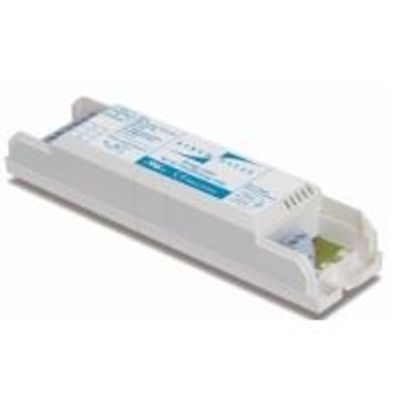
Aircosaver - Air Conditioning Energy Saving Device
The AIRCOSAVER is a retrofit energy-saving device that makes old A/C units more intelligent. The A/C unit will run more efficiently and consume less energy during cooling.
The AIRCOSAVER
- is an electronic control unit that adds intelligence to simple air conditioning systems and improves their energy efficiency.
- is proven & reliable with tens of thousands of AIRCOSAVERS installed since 2001. Check out some references.
- achieves on average between 15% and 20% energy savings, resulting in a short payback period.
- is 100% engineered & manufactured in Germany to highest quality standards.
Air conditioning has a huge potential for efficiency improvements
Air conditioning is one of the largest energy consumers in the residential and industrial sector. Thousands of air conditioners put high demands on our electricity networks. On a smaller scale, air conditioning probably accounts for a significant part of your energy bill.
Most existing air conditioning units waste a significant part of the consumed electricity because they are not controlled in a smart way. They use old and quite inefficient technology. Although improved technology has become available in more expensive systems (e.g. inverter technology), the payback time of these systems is still very long and most of this technology is not suitable as an easy and economical aftermarket fit to existing systems.
Making these air conditioning systems more energy efficient is by far the quickest, most affordable and most effective way to reduce your CO2 emissions and lower your energy bill.
In the light of today’s energy problems, global warming and since older and not so advanced aircon systems will be in use for many more years in large numbers, we have analysed various existing energy saving techniques for air conditioning systems and reviewed plenty of earlier research. The conclusion was that detecting the system’s efficiency and switching the compressor accordingly is probably the only effective, pragmatic and economical measure to achieve a better energy efficiency. There is no „free lunch“ with any retrofit, but these savings come at no or only very small decreases in cooling comfort.
Often copied, never reached. The AIRCOSAVER is the genuine original that has been setting the standard in its product category ever since the introduction of the first AIRCOSAVER generation back in 2001.
A typical cooling cycle
When switched on, typical air conditioning systems operate continuously until the room thermostat senses the desired temperature and turns the system off. As the room warms up, the thermostat switches the air conditioner back on and the cycle repeats.
Most air conditioning systems are oversized for the majority of operating conditionsAir conditioning systems are usually dimensioned to cope with the extreme cooling demands of the few hottest days of the year (plus a safety margin).
However, in most operational conditions, this maximum output is not required and the system is oversized. So running the system continuously until the room thermostat switches it off means that the system operates with excess capacity most of the time.
A typical cooling cycle with excess capacity looks like this:
- When the cycle starts, the compressor pushes cooling energy into the heat exchanger which acts as an energy storage. At this stage, the system works with high efficiency because compressors operate most efficiently when fully loaded.
- In normal weather conditions, the energy storage is soon fully „charged up“. From this point onwards, the compressor provides more cooling energy than the heat exchanger can take up (thermodynamic saturation).
- Running the compressor beyond this stage does not increase the cooling effect any more. It’s just a waste of energy!
The aircon energy saver compensates the shortcomings of typical AC units and adds intelligence to your AC system
The AIRCOSAVER’s sensor-driven software algorithms are designed to detect thermodynamic saturation and to optimize the compressor accordingly. When overcapacity is detected, the AIRCOSAVER switches the compressor off and avoids inefficient overcooling.
Your unit switches into „saver mode“. The fan keeps running and your system makes maximum use of the stored cooling energy in the heat exchanger. Once the stored energy is used up, the compressor can work efficiently again and is switched back on.
Since the correct point to switch the compressor varies from unit to unit and changes with different weather conditions, the AIRCOSAVER is constantly monitoring the cooling status of your aircon unit and adapting its settings to ensure efficient operation of your air conditioning system at all times.
Protecting your unit against short cycling
Cycling the compressor too frequently in too short time intervals may harm the compressor and must be avoided. For this reason, the AIRCOSAVER features a built-in anti short cycling protection.
Besides the continuous anti short cycling protection, the AIRCOSAVER also adds a delay upon power-on to your unit. This valuable feature protects your aircon unit against damages from short power outages like they are common in many developing countries.
AIRCOSAVER installation is simple and takes approximately 15-30 minutes (depending on local situations). A detailed step-by-step installation manual is provided with each AIRCOSAVER.
The AIRCOSAVER is designed to be installed into existing systems as an after market fit (retrofit). The AIRCOSAVER is NOT a DIY (do-it-yourself) solution. It should be installed by a qualified A/C technician or electrician.
For which systems is the AIRCOSAVER suitable?
An AIRCOSAVER is suitable for most residential and light commercial DX (direct expansion) AC systems, e.g. window units, wall-mounted units, single splits and small packaged units.
Where should you NOT install an AIRCOSAVER? The standard AIRCOSAVER is NOT suitable for
- chilled water systems,
- evaporative cooling systems,
- inverter type split systems and
- multi split systems.
- Also, some Mitsubishi models (e.g. the Mr. Slim range) are NOT suitable for installation due to extensive built-in monitoring functions which can cause problems under some operating conditions.
For clarity’s sake the images below illustrate the installation of an AIRCOSAVER into a small window unit. However, the installation steps are basically the same for many other types of aircon units. The AIRCOSAVER is suited for a wide range of air conditioning types such as single-split systems, packaged units or small central aircon units. In our „Support“ section your will find extended installation and demo guidelines.
- Quick & easy to install
- AIRCOSAVER continuously analyses how A/C unit and room interact and constantly adapts its parameters for best possible savings and comfort
- Does not require maintenance
- Separate versions for all main power supplies (230V, 110V, 24V) available for all common kinds of mains power supply.
Advanced software for savings & comfort
- Optimized parameter settings for higher savings at no noticeable decrease in cooling comfort
- Savings algorithm of the standard AIRCOSAVER optimised for systems up to 10 tons (please contact us for special versions for larger cooling systems)
- AIRCOSAVER quickly understands the current cooling situations and constantly adapts to ensure best possible savings at full cooling comfort.
Cycle protection for your aircon unit
- Improved anti short cycling protection and overall compressor protection
- Protection against short and potentially damaging power outages
As engineers we do not believe in miracles and we are sure you don’t, either. During the development of the Aircosaver we conducted a lot of research and experimented with various principles that provide energy savings in other applications. We would like to share some of these insights with you.
We also came across all sorts of „unique“ devices and „magical black boxes“ that claim to save energy, which we will not comment further. Please be adequately suspicious and make sure you really understand what they do before spending large amounts of money.
Induction motor controls, power factor correctors
For many years devices have been around that aim to optimize the operation of induction motors which frequently run on partial loads. The basic concept was invented by Frank Nola of NASA in the late 70’s. The aim was to reduce energy wastage on small single phase induction motors. Basically, these devices monitor the difference between kw and kVA drawn by an electrical consumer. Based on this difference, they then try to match the motor better to the load, e.g. by reducing voltage. This in turn reduces the magnetizing current and the iron losses and in turn improves the power factor (this then leads to some other, often detrimental effects).
There is a range of products available that all claim to be truely unique. This principle is employed by the controllers you can get from companies like Somar, Savawatt or Power Efficiency Corp.
Besides that there are devices available that combine power factor correction with a delay in power supply during each phase (like a phase cut-off dimmer), also termed „energy modulation devices“. Each sine wave is delayed for a small amount of time (few miliseconds) when passing through zero voltage. So a small part of each sine wave is basically chopped off.
Power factor measurement on Hitachi window unit The manufacturers of power factor devices frequently claim that air conditioners have low power factors. During development we measured the power factor of some units. At least the ones we have tested were already compensated internally very well. So no improvement potential here. Even our cheap Hitachi window unit has a power factor of 1.0 with maximum deviations to 0.99 inductive and 0.99 capactitive.
Our comment: Certain savings are possible with this principle if devices really are compensated badly or if supply power quality is very bad. Savings have been demonstrated, especially where oversized induction motors run idle for a long time such as in injection moulding machines. Most major companies that used to employ this technology have dropped it (Siemens, GE, etc.) because savings in typical applications were usually significantly smaller than expected. The available market prices for these devices lead to very long payback times. We could not make out any potential for typical air conditioners since they are usually compensated quite well. For very interesting discussions on these products go here or read this analysis.
Inverters, variable speed drives (VSD)
Induction motors as they are typically used for compressors and fans in air conditioning systems, are limited to a very narrow range of speeds, they are basically fixed-speed motors. Their speed is determined by the constant frequency of the power supply (typically 50 or 60 Hz).
Inverter controls enable the fixed-speed motor to operate at variable speeds. The combination of motor and control unit is then termed „Variable speed drive“. Inverter controls are usually used on three-phase AC (alternating current) motors but can also be used on some single-phase AC motors. These controls use rectifiers to create an intermediate DC voltage out of the AC supply voltage. Out of the DC voltage the inverter then generates an AC output signal of varying frequency and voltage to the compressor. Most modern controls use pulse width modulation for the output voltage. Filtering harmonics and electromagnetic compatibilty are typical issues that need to be taken care of, but modern inverter systems have made significant progress in this respect.
Variable frequency controllers are probably the most effective controllers available today. However, to create a good system, the controller needs to be matched carefully to the load and the whole system should be designed with this approach. That’s what makes inverter controls rather expensive and difficult to retrofit. Whether an inverter control can be fitted or not needs to be examined in regards to the specific system. This in combination with the high cost is why inverter retrofits are usually only conducted as one-offs on large systems.
Our comment: Way to go!
Variable frequency drives are very effective energy savers. When replacing your old system with a new one, you should definitely buy a high-efficiency system including inverter controls. Very similar to the implementation in the AIRCOSAVER, these controls use sensors to define load and current efficiency of the aircon system and establish a control loop. Where the AIRCOSAVER switches the compressor off, the inverter will reduce the speed of the compressor (and potentially fans) to a lower level. Inverter systems are still clearly more expensive than other systems, but this will pay off over the system’s lifecycle. Retrofits only make sense for large systems and feasibility needs to be judged specifically for each unit.
Static duty cycling and various other cycling methods
In static duty cycling the aircon unit (compressor and/or fan) is cycled on a predetermined (fixed) pattern on and off. The background for this technique mainly lies in demand side management in terms of load shifting and peak demand reduction. Other duty cycling devices try to prolong the on and/or off periods based on monitoring thermostat calls. Several other methods have been proposed.
Our comment: These principles can save some energy but savings usually come at the cost of a significantly reduced cooling comfort since current efficiency is not taken into account.