

- Home
- Companies
- Westland Environmental
- Products
- Cyclonator Incinerators
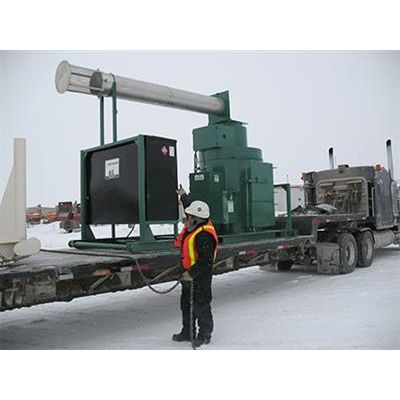
Cyclonator Incinerators
The incinerator’s capacity is dependent on waste composition: Incineration Capacity: The higher the heating value of the waste, the lower is the capacity in terms of kg/h that can be incinerated. This can be explained by noting that waste that has a higher heating value requires more air per unit of mass to incinerate than does waste with a lower heating value. Load Capacity: The size of the batch loaded into the incinerator is based on the heating value of the waste. The higher the heating value, the smaller (lighter) the load should be, otherwise an insufficient amount of air will generate black smoke.
- Waste Characterization: When this is not known, use indications of the components present. To assist in getting a qualitative estimate of the heating value of a batch of waste, the heating values of common waste components are shown in the below table.
- Volatile Content: Another important waste component is the volatile content in the waste. The table below shows the proximate volatile components of various materials and wastes. In general, this component is responsible for smoke generation. Therefore, as in the case with heating value, the higher the volatile content, the smaller the load charged into the incinerator.
Cyclonator Incinerators have certified international performance capabilities designed for the unique waste stream, with pollution control systems as required. These can include optional filters for particulate matter and scrubber systems for acid gases.
The design of the Controlled Air incinerators includes a primary chamber for burning with exhaust gases passing through a secondary chamber for re-burning of any residual harmful gas components. This secondary combustion controls reaction time and destruction temperatures before safe release to the atmosphere. Dioxins, furans, and similar gaseous pollutants are destroyed at operating temperatures of between 650 and 1,000 deg C, with a reaction time of two seconds and excess oxygen of more than six per cent. When required, environmental controls such as wet and dry scrubbers can be integrated into the design. A heat exchanger is also an option.
The Cyclonator range of designs also offer heat-recovery options which can increase your return on investment and reduce your carbon footprint, potentially adding revenue streams to further strengthen your bottom line. Westland has a comprehensive range of technologies available to help capture the heat generated and use it as heat.