The global floating solar market has witnessed significant growth, driven by the increasing demand for renewable energy and the challenges posed by land scarcity.
With 71 percent of the Earth's surface covered by various water bodies such as rivers, lakes, and near-and offshore environments, floating solar solutions have emerged as a viable and sustainable option to harness solar power.
Deploying floating solar solutions requires careful consideration of the unique characteristics of each location. A suitable technology in one area may not be appropriate in another. Therefore, there is a demand for diverse floating PV technologies tailored to specific water environments.
Floating solar developers draw significant attention to locations exhibiting high production potential and facing land scarcity challenges.
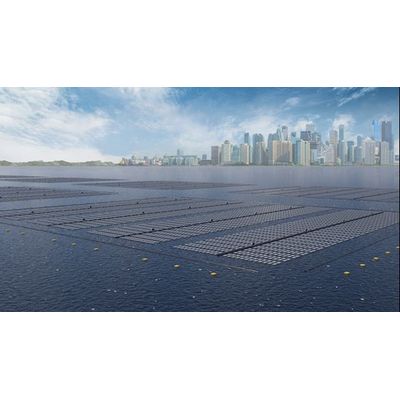
Today, Floating PV (FPV) is predominantly installed on lakes and hydropower dams. However, the development of large-scale projects faces space constraints and oftentimes distance to the grid. Offshore installations offer space but come with extreme environmental loads and high costs.
We believe the most viable market for large-scale FPV is in nearshore seawater, where conditions are more benign, and developers can access vast areas and engage with one single stakeholder for site access, streamlining negotiations and reducing land-use complexities. Increased flexibility with sites in turn offers shorter distance to grid or offtakers, reducing power export costs. In sum, nearshore projects enable faster project development and more opportunities.
Brizo addresses these challenges by providing a low-cost, robust solution, capable of scaling FPV projects nearshore while withstanding environmental loads, making it an ideal choice for large-scale projects