


- Home
- Companies
- CFR Engines Canada ULC
- Products
- IQT - Model XLM - Enhanced Fuel Testing ...
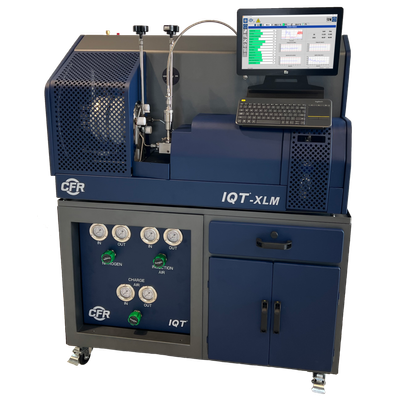
IQT - Model XLM -Enhanced Fuel Testing System
The IQT-XLM Model is an advanced system designed for comprehensive testing and certification of diesel fuels and their alternative counterparts. Developed by CFR Engines Inc., this instrument incorporates a Constant Volume Combustion Chamber (CVCC) and has been a reliable tool since 1998 for refineries and laboratories worldwide. The IQT-XLM combines the capabilities of previous IQT models into a single compact unit, available in benchtop or Integrated Systems Module formats, enhancing user interactivity and operational convenience. Its compliant testing methods align with major international standards such as ASTM D6890, EN 15195, and IP 498, and it's suitable for evaluating cetane numbers in diesel, biodiesel blends, and other advanced fuels per ASTM D975 and EN 590 specifications. Utilizing the High Precision Fuel Injection System (HP-FIS), it ensures high precision and consistency in measurements. The intuitive interface and advanced display options improve monitoring of test conditions, significantly benefiting research and quality assurance processes.The IQT conducts tests that are fully compliant with all procedures of the current IQT test methods:
- ASTM D6890
- EN 15195
- IP 498
Cetane measurements for certification purposes meet the requirements of most international and national fuel specifications for diesel fuel, biodiesel blends, HVO and GTL, including:
- ASTM D975, ASTM D6751, ASTM D7467
- CARB EN 590, EN 15940
CAN/CGSB-3.517, CAN/CGSB-3.520 , CAN/CGSB-3.522, CAN/CGSB-3.524
- Rapid test results: less than 20 minutes per sample
- Suitable for 24/7 operation
- Automated control of injection nozzle and combustion sensor temperatures (formerly requiring the TALM option) is standard equipment
- Touchscreen-compatible user interface with multi-language capability
- Access to test records and system logs
- Simplified exhaust ventilation requirements
- Integral sample waste collection system
- Positive pressure cabinet ventilation prevents any ingress of flammable vapors
The main system operating screen clearly displays all operating parameters, using large, color-coded bar graphs to indicate to the user whether a parameter is within allowable limits. The bar graphs are sized so that a basic check of the instrument’s condition and test progress can be done from a distance. New intuitive and convenient user interface with:
- Simplified access to calibration and diagnostic functions
- Advanced diagnostics for condition-based maintenance
- Multiple language capabilities
- Touch screen HMI with industrial PC
- Windows® based user interface with full Windows desktop
- Electrical Connection: 20A,208-240 VAC, 50/60Hz
- Integral cooling system with built-in Uninterruptible Power Supply (UPS): > 3.5 hrs of run time for the cooling system and computer
- Low Sample Volume: 35 ml for cleaning, 30 ml for test run
- Ignition delay (ms) and Derived Cetane Number (DCN), Correlation of DCN and Cetane Number (CN) recognized by ASTM (versus D613) and CEN (versus ISO 5165)
- 0.53 @ 40 DCN
- 0.65 @ 50 DCN
- 0.89 @ 70 DCN (ASTM D6890-22)
- 31.5 to 75.1 DCN (ASTM D6890 – 22 scope)
- 30.4 to 78.9 DCN (applicability of ASTM D6890 precision functions per ASTM D6300)
- 33.9 to 76.8 DCN (EN 15195:2023 scope)
- 32 to 81.1 DCN (range of valid results for EN 15195 per ISO 4259)
- Compressed air at 12.1 bar (175 psi)
- Compressed air (19.9-21.9% O2) at 21.4 bar (310 psi)
- Compressed nitrogen at 3.5 bar (50 psi)
- n-heptane 99.5%, octane engine grade (calibration reference material, check standard)
- Methylcyclohexane 99% (verification material)
- Reference diesel fuel (quality control sample)
All IQT systems utilize a modern patent pending fuel injection system. The High Precision Fuel Injection System (HP-FIS) from IQT leverages advances in injection technology to deliver the results and precision expected of today’s instruments.
- Increases the precision of results though injection management
- Upgrade capable to older IQT systems with similar design
- Reduced test variability through precision manufacturing
- Maximized performance with HP-FIS matched to whole system
Since the first commercial release of the IQT System, significant efforts have been made to ensure the instrument meets or exceeds the specifications and performance defined in industry standards. Click the link below to see all of the IQT standards associations.