


- Home
- Companies
- IBIS Power
- Products
- PowerNEXT - Lightweight Steel ...
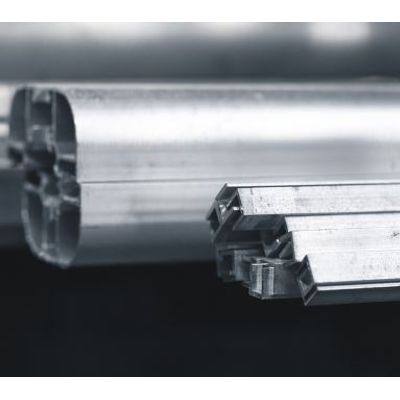
PowerNEXT - Lightweight Steel Construction
The frame of PowerNEXTis made of a new, lightweight steel construction of prefabricated, cold-rolled profiles.
Four groundbreaking innovations are ushering in a new era for PowerNEST. Read about what those four innovations entail here, and schedule an appointment with IBIS to engage in conversation and discover if your project can make a visible big, sustainable impact with PowerNEXT.
The four PowerNEXT innovations at a glance
- Lightweight Steel Construction
- Better Business Case
- New Generation Turbines
- PowerNEXT Light
The frame of PowerNEXTis made of a new, lightweight steel construction of prefabricated, cold-rolled profiles. This provides the following:
- As a result, the structure weighs 30%, or about 2,000 kg less per PowerNEXT unit.
- The steel cost of a PowerNEXT is up to 50% lower (depending on the number of units).
- There is no more welding involved.
- Installation costs drop from 22.5% of PowerNEXT's hardware price to 12.5% of the hardware price.
- Because PowerNEXT comes as a prefabricated kit, installation is 2 times faster.
- The frame's material is corrosion resistant, requiring virtually no maintenance.
- Choosing your own color for PowerNEXT? You can do that much easier and cheaper with this material.
PowerNEXT's business case not only has better results through lower costs and higher revenues thanks to innovations 1 (lightweight steel construction) and 3 (new generation turbines), the business case is also better substantiated by Stadkwadraat 's economic real estate consultants.
We live in a time when the economic value of real estate is heavily influenced by whether or not sustainable measures are taken.
There's three important economic effects on the real estate market that are now taken into account in the PowerNEXT calculation model:
-
Especially for older buildings, if no sustainable investments aren't made now, it quickly becomes unprofitable to do so later. These buildings become stranded assets: no one wants to invest money in them anymore and decay is imminent.
-
Carbon monoxide emissions tax from 2027 - almost no one is acting on this yet, so the blow to building owners who have not taken action will be great. Choosing a PowerNEXT means drastically reducing this risk.
-
The rental market is under pressure - vacancy, especially in offices, because potential tenants prefer sustainable buildings. If this persists too long, the cycle is complete: these buildings quickly become stranded assets.
This innovation and collaboration accurately maps these and more economic impacts of a PowerNEXT rooftop installation, revealing for which building owners and investors investing in PowerNEXT will deliver the desired returns in the shortest possible time.
PowerNEXT's new generation of wind turbines generate up to 4 times more energy (15 - 20 MWh/year) than previous ones and are an improvement on more fronts:
- The old turbines have an output of 3 kW, with the new generation there is a choice between 4, 5, 7 or 10 kW - with 7 kW being the most common.
- The new turbines start producing energy at low wind speeds, at less than 3 meters per second.
- This type of wind turbine does not stop at high wind speeds, but limits itself and even generates (braking) while doing so.
- Also, this new generation turbine produces more energy at a lower torque, by means of a system similar to a 'gearbox'.
- The sound level of the wind turbines was already within legal limits, but with the new turbines it's down to barely measurable sound production.
- Moreover, the new turbines are virtually maintenance-free.
PowerNEST is designed to fit seamlessly on most square and rectangular buildings and provide optimal wind efficiency with minimal modifications. Of course, there are buildings where PowerNEST's square corners are technically or architecturally unsuitable. For these situations, the fourth and latest PowerNEXTinnovation provides a solution.
With the help of architect Annebregje Snijders, we developed a version of our solution without wind turbines, with many other advantages:
-
More freedom in material selection and architectural design. Thus, an application form can also be designed in consultation with the architect of the building.
-
PowerNEXT Light is suitable for buildings where 'ordinary' solar panels are not profitable due to fire safety and the high cost of fire insurance. This is because the panels 'float' above the roof surface on a steel structure and the wind also cools them on both the top and bottom.
-
It also retains the other positive effects on solar generation known to PowerNEXT. In addition to wind cooling the solar panels, the bifacial solar panels generate energy not only with the top but also with the bottom, thanks to the reflection of the sun. In addition, the elevated structure allows the panels to be installed above existing roof installations, allowing a much larger surface area to be utilized.
-
The design is compatible with the existing architecture of a building or can unite different-looking buildings within the same complex into a single entity.
-
Does the building have a green challenge? PowerNEXT Light offers many different options for roof gardens. Roof gardens and solar panels no longer have to be mutually exclusive.