
Nabrawind Technologies
  1. Companies
  2. Nabrawind Technologies
  3. Products
  4. Model Nabralift - Nabrawind Self ...

Model Nabralift -Nabrawind Self Erecting Tower

SHARE
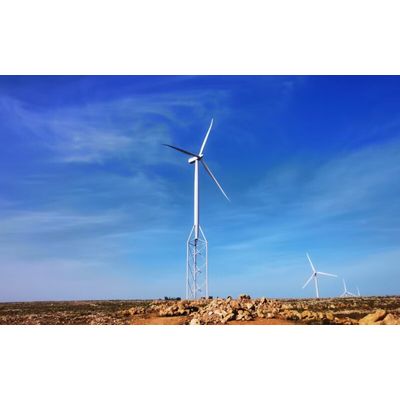
Nabrawind Self Erecting Tower (Nabralift) is a new wind turbine tower technology that breaks all the barriers that are restraining the growth of the wind turbines hub height. Nabralift consists on a three-columns structure installed under the uppermost part of a WTG tubular tower and integrates a Self-Erection System (SES) that allows the installation of a full WTG (tower, nacelle, rotor) without using large-size cranes regardless of the final hub-height.
Most popular related searches

However, technical barriers and costs associated to manufacturing, transport, installation and maintenance of these towers hinder the viability of many wind farms when the existing technology is used:

Costs

Tower manufacturing, transportation and installation costs increase significantly, making additional hub height increase unprofitable in many cases.

Cranes

Massive and expensive cranes are needed, with long assembly and disassembly times.

Logistics

Logistic barriers can make some locations unreachable for the projects, and the need of special equipment increases costs and project duration.

Resonances

Resonances between the tower and the turning rotor becomes a design-driver on conventional steel towers, increasing the tower loads and cost and requiring special control techniques.

The Nabralift Tower is a metallic hybrid support structure formed by:
  • An upper metallic tubular tower segment larger than the blade, so that blade tip clearance is unaffected.
  • A straight frame tower segment constituted by several modules of uniform height, composed by three vertical columns and a x-type bracing in the three module sides.
  • A metallic transition part between the upper tubular tower segment and the frame tower segment.
Nabralift integrates a Self-Erecting System (SES) that allows the installation of a full WTG (tower, nacelle, rotor) without using large-size cranes regardless of the final hub-height. For this purpose, the SES is able to hoist the WTG in intermediate stages and install tower sections under it.
The tower transition is fixed on the foundation, and after the tubular tower section, the nacelle and rotor are installed with a small standard crane. Then, the Self-Erecting System (SES) is installed on the tower foundation, and one erection cycle is repeated for every frame module: the SES jaws clamp the tower, which is detached from the foundation and elevated. Then, the frame module is guided and fixed to the foundation interface. The tower is then lowered and connected to the new frame module.

SES is designed to operate in high wind wind conditions (up to 15m/s), avoiding inoperative time periods in the WTG assembly.