


- Home
- Companies
- XEMC Darwind BV
- Products
- Darwind - Model XD140-4MW - Onshore ...
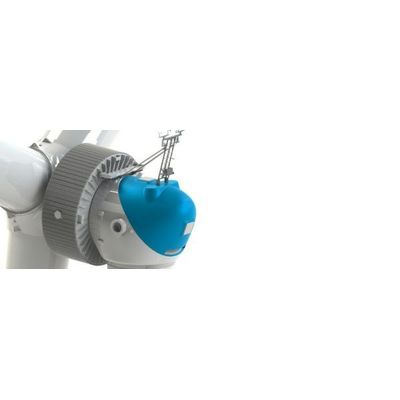
Darwind - Model XD140-4MW -Onshore Turbine
The XD140 onshore 4MW turbine is derived from the offshore dedicated XD115 model. With a larger rotor diameter and designed for lower average wind speeds (compared to its predecessor), this turbine brings the benefits of the XD115 design to the onshore locations. The focus remains on fast installation and low maintenance. Hub heights can go from 100m up to 140m.
The XD140 is a wind turbine with a nominal power of 4 MW and a three bladed rotor with a diameter of 140 meters. The turbine design is derived from the XD115 offshore dedicated wind turbine generator. The turbine is designed according to IEC 61400-1 for a wind class IIA.
Darwind uses the philosophy of horizontal integration what means all manufacturing is outsourced and we only assemble and test before sending the turbine to site. All design work however is done in house and in conjunction with strategic suppliers for components such as blades, bearings, hydraulic systems, towers and pitch system. In this sense we are a system integrator although the majority of the components are of exclusive design.
PatentsAll intellectual property rights of the XD115 turbine are vested in XEMC Darwind B.V. (Netherlands). To date no license rights have been granted to third parties. To protect XEMC Darwind’s unique position over 20 patents are pending.
XEMC Wind turbine technologiesXEMC turbines are based upon the single bearing, direct drive, and permanent magnet principle.
Structural design
Use is made of a single multiple row roller bearing on which the hub is mounted on one side and generator carrier and –rotor on the other side. The stator is mounted on the opposite side of the carrier which in turn is mounted on a compact casted nacelle frame. The advantage of this design is the relative big diameter the load path follows, contrary to the traditional designs with a main shaft. Hence considerable weight reduction is achieved.
Light weightInnovative design and new materials have resulted in an easy to install, large, lightweight turbines.
Direct DriveOur product platform is based on the direct drive principle, thereby dispensing of the need for gearboxes. Gearboxes pose a significant problem for offshore wind turbines because the torque of multi-megawatt wind turbines is enormous. In contrast, gearless turbines require less maintenance, are more reliable and therefore boast higher operating availability.
The rotor speed during power production is variable. The matching between the available aerodynamic torque and the produced electromechanical torque of the generator is determining the rotor speed. No use of a gearbox is made. The torque-speed curve is programmed in the frequency converter controller and the inverter is adapting the generator stator current in response to the measured generator power frequency.
Single main bearing & generator in oneThe XEMC Darwind XD and XE platform is based on the single main bearing concept. The bearing has a large diameter that enables it to bear the enormous force of the rotor: there is no central shaft. The bearing component is integrated into the generator and is possible because the turbine uses direct-drive technology. This innovative design not only creates a compact and lightweight permanent magnet direct-drive generator; it also results in significant savings in logistics, foundation and support structure costs.
Fully sealedThe tower and nacelle of the turbine are fully sealed to keep out the salty and moist sea air. This protects our valuable components, increases operational availability and saves a great deal of maintenance.
Permanent magnetCoil driven generators make use of electrical excited magnets. XEMC’s Permanent Magnetic systems are lighter/compacter, more efficient and require less copper than Coil Driven generators. As no additional electricity is required to magnetise the rotor coils, there is no need for generator `brushes` to transfer this electricity. This increases both efficiency and reliability because the rotating part of the generator contains no electrical systems.
Full power conversionThe AC-DC-AC converter, located in the bottom tower section, allows the generator to operate with a variable speed while the power is fed into the grid with a constant frequency of 50 Hz (or 60 Hz for the countries where this applies). It furthermore assures an average constant power output for wind speeds above rated. The power factor at the grid side is controllable at standstill as well as in operating mode. Above rated wind speed, the blade pitch control maintains a more or less constant rotor speed between admitted boundaries.
Grid code flexibility / grid code complianceXEMC wind turbines have a pitch-controlled variable speed rotor and a full power converter, capable of meeting the requirements of the most demanding grid codes, e.g. with respect to reactive power.