

- Home
- Companies
- Guangdong Pumbaaev Drive Technology ...
- Products
- Pumbaaev - Model PPS570 - Power ...
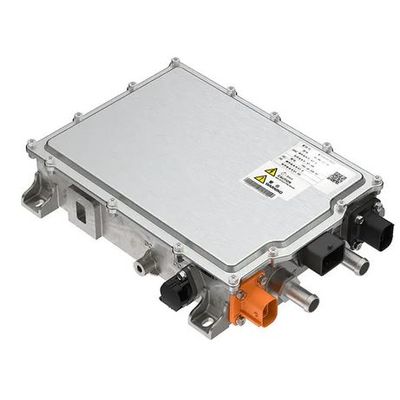
Pumbaaev - Model PPS570 -Power Conversion & Distribution Unit for Electric Vehicles
Power conversion and distribution system refers to the vehicle charger (OBC), vehicle DC/DC converter, high-voltage power distribution box (PDU), as the core parts of the electronic control, plays an important role in the conversion and transmission of AC and DC energy. Power conversion and distribution system development trend: integration, multifunctionality, high power into. The on-board charger (OBC) is an important electronic device that connects to the AC charging post and converts AC power to DC power; the on-board DC/DC converter converts the high-voltage power output from the power battery into the low-voltage required by each electrical appliance; the PDU is a high-voltage power distribution unit that distributes the DC power output from the battery and monitors the over-current and over-voltage.
EV components mainly include powertrain system (power battery, motor controller, motor) and power conversion and distribution systems (on-board charger OBC, DC/DC converter, high voltage distribution box PDU).
1. OBC
Electric vehicle charging can be divided into two kinds of AC charging and DC charging, 1) DC charging “fast charging”, the use of external “DC charging pile” directly to the power battery charging, without the use of on-board charging machine; 2) AC charging “Slow charging”, AC charging piles supply single-phase AC (220V) or three-phase AC (380V) current from the AC grid to the on-board charger (OBC) installed in the vehicle, and the OBC can convert AC power into DC power to charge the new energy vehicle.
New Energy Vehicle Charging Method Schematic
Comparison of AC and DC charging
On-board chargers (OBC) can realize the slow charging function of electric vehicles. OBC are mounted on electric vehicles and connected to AC charging piles during charging to convert AC power into DC power for slow charging of power batteries. 400V OBC are mostly 3.3 or 6.6kW, while 11.22kW OBC have been developed to meet the charging demand of 800V and may become the mainstream power in the future.
Schematic diagram of the appearance of on-board charger (OBC)
2. DC/DC
DC/DC converter (DC-DC converter) draws power from the power battery and charges the 12V or 24V low-voltage battery in the vehicle. DC/DC can convert a certain value of DC power supply voltage output from the power battery to another value of DC power supply voltage, and play the role of regulating power supply output and stabilizing power supply voltage. Usually, it can be divided into three kinds: high-voltage to high-voltage DC/DC converter, high-voltage to low-voltage DC/DC converter, and low-voltage regulator DC/DC converter.
DC/DC converter external schematic
Schematic diagram of the operating principle of the automotive DC/DC converter
The input of the on-board DC/DC converter is connected to the high-voltage output of the power battery, and the output is connected to the low-voltage appliances and the battery in parallel. When the VCU (vehicle controller) does not receive the high-voltage command, the battery supplies power to the low-voltage appliances. When VCU receives high voltage command, DC/DC converter will start, and the high voltage power output from power battery will be converted by DC/DC converter to output stable low voltage power. DC/DC converter should supply power to low voltage appliances and battery according to the actual power consumption of vehicle electrical appliances and the charging/discharging balance of battery.
3. PDU
High-voltage Distribution Unit (PDU) is a high-voltage power distribution unit that distributes the DC power output from the battery and monitors the over-current and over-voltage in the high-voltage system. PDU connects the power battery and controls the charging and discharging through the busbar and wiring harness, and distributes the DC power output from the power battery to the high-voltage electrical appliances of the automobile, such as OBC, on-board DC/DC converter, motor controller, air conditioner, PTC and so on, and it plays a function of overload and short-circuit protection, low voltage control, etc., to protect and monitor the operation of the high-voltage system. In the high-voltage system, it plays the role of overload and short-circuit protection, low-voltage control and other functions to protect and monitor the operation of the high-voltage system.
Appearance diagram of high voltage power distribution box (PDU)
PDU Function Diagram
Trend 1: High-power
Solution to charging anxiety, many car companies choose high-voltage fast charging. To solve charging anxiety, there are two modes: high-voltage fast charging and power exchange; Azalea and Geely Ruilan layout power exchange mode; Porsche Tycan is the first 800V fast-charging model; after Porsche, BYD, Dongfeng Lantu, Geely, Xiaopeng and other automobile enterprises lay out high-voltage fast-charging, and Xiaopeng G9 has become the first 800V high-voltage SiC car model.
High-voltage fast charging becomes the main trend
Trend 2: Integration
The mainstream trend is the integrated design of OBC, DC/DC, PDU and other components. Integration of power conversion and distribution system can realize 1) lightweight, reduce the total weight of power supply device, promote electric vehicle lightweight, improve range and reduce costs is an important development direction for electric vehicle enterprises, 2) reduce costs, after integration, the value of a single vehicle decreases, reduce the number of parts that need to be assembled in the production process of the whole vehicle, so as to reduce the cost of the vehicle enterprise, the cost of the integration decreased by $700-800.
Trend 3: Multi-functional
Unidirectional on-board DC/DC converters are evolving into bi-directional types, which can reduce costs by replacing the associated devices for pre-charging bus capacitors and reducing the use of zero components. The bi-directional DC/DC can realize the bi-directional flow of power, converting low voltage power to high voltage power. When the motor accelerates, the battery is discharged through DC/DC; when the motor brakes, the braking energy charges the battery through DC/DC, which reduces energy loss and improves vehicle range. Bidirectionalized OBC plays the role of mobile distributed energy storage. Traditional unidirectional vehicle chargers can only meet the one-way flow of energy, which flows from the power grid to the power battery through the OBC. Bidirectionalization means that through the inverter technology of OBC, energy can flow from the power battery to other electrical appliances via OBC, thus enabling new energy vehicles to meet the function of emergency charging in daily life.
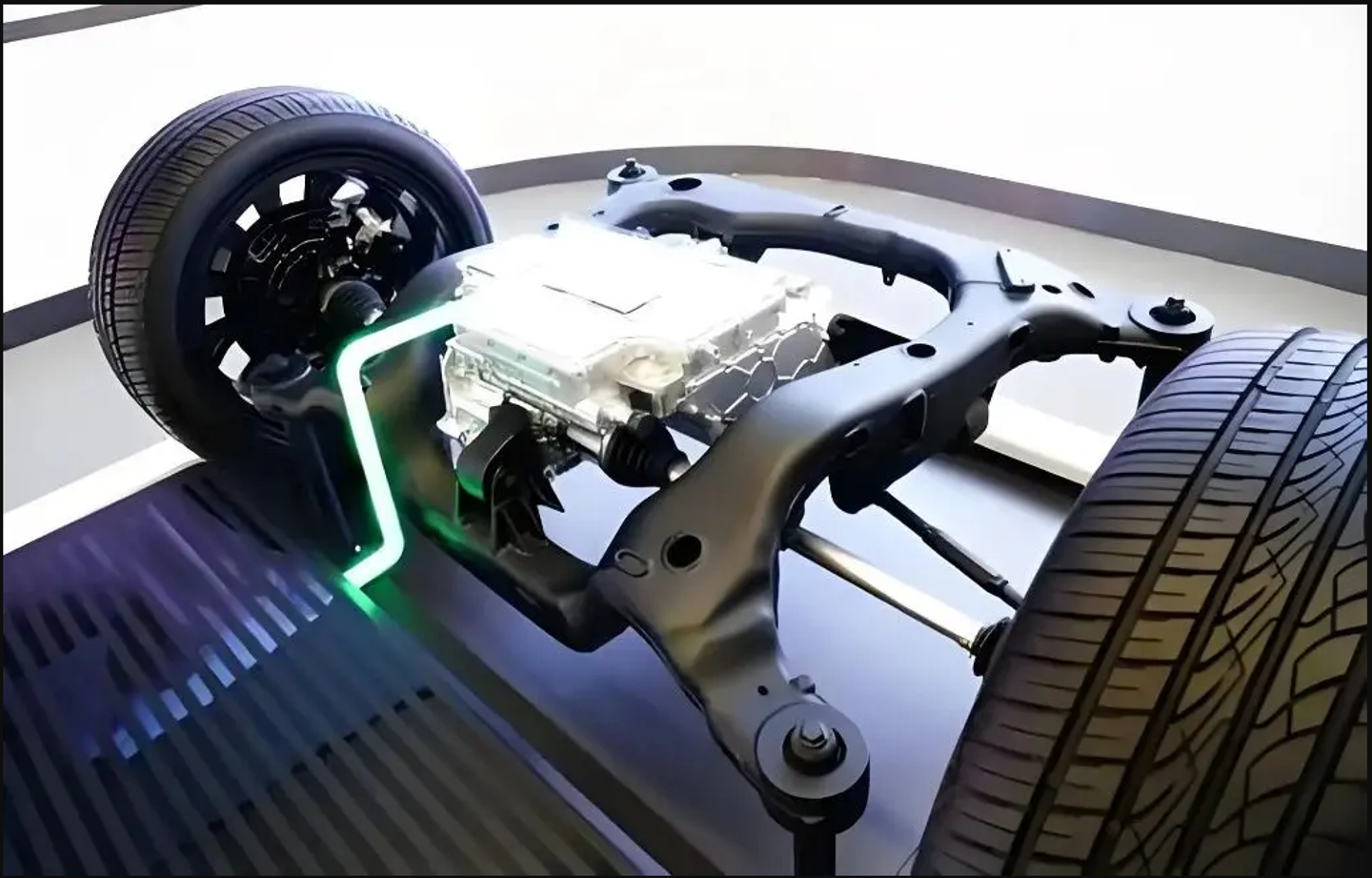
Features of Electric Vehicle OBC+DCDC+PDU 3-in-1 CDU Unit
- 3-in-1 power supply, integrated of OBC, DC/DC, and PDU, applied to most of electric vehicles, OBC realizes bidirectional conversion of charging power, PDU realizes high voltage power distribution
- It shortens the arrangement of UVW high-voltage wiring harness, reduces the high cost of using UVW high-voltage wiring harness, and effectively improves the efficiency of motor, controller and reducer after shortening the transmission distance.
- The integrated electric drive assembly achieves 30% weight reduction and 40% volume reduction, which improves its overall body space utilization by more than 50% and provides a strong guarantee for range.
- The vehicle`s center of gravity is lowered for better handling performance, which also leads to higher torque capacity and improved efficiency of the electric drive system assembly.
- The reduced size of the electric drive system makes the space layout inside the vehicle more flexible, and the modular design can be extended, which greatly shortens the product development cycle and reduces costs and increases efficiency.
- OBC, or On-Board Charger, mainly converts single-phase AC or three-phase AC into DC to charge the vehicle power battery.
- DC/DC converter mainly converts the high-voltage DC power output from the power battery into low-voltage DC power to supply power to the low-voltage power equipment of the vehicle.
- PDU is the high-voltage power distribution unit, which is a centralized power distribution scheme for new energy vehicles, with compact structure design, convenient wiring layout and convenient maintenance.