


Sülzle-KOPF - Solar Thermal Energy Module
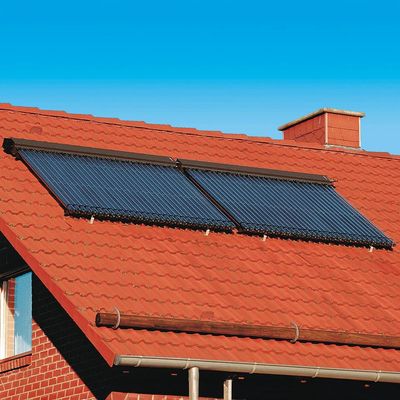
Everyone knows how solar thermal energy works. When water is exposed to the sun, it heats up. The darker the container used, the faster the water heats up. This is exactly the principle used by solar collectors. The sun heats a special liquid in the closed circuit of flat or vacuum tube collectors. It is passed through a heat exchanger, which absorbs the heat and passes it on to a drinking water storage tank. The water heated there can be used for a bath or to support the heating.
Carbon footprint and energy cost reduction
A small collector area is sufficient to heat your drinking water. Just two collectors cover more than half of the annual heat requirement of a single-family home. This reduces energy costs and the home`s carbon footprint . If the solar system reaches its full capacity in summer, it produces enough hot water for daily use. In winter, the energy supply is at least sufficient to preheat the drinking water.
Independent of fluctuating prices
If solar panels are installed on the roof and the water tank is large enough, solar energy is used even more efficiently. In addition to drinking water, it heats the heating water and can therefore cover up to a quarter of a house`s total energy needs. Solar thermal energy can be ideally combined with existing heating systems in buildings. This makes it less dependent on fluctuating prices for fossil fuels - and oil and gas heating systems - and future-proof. If there is enough space on the roof, combining it with photovoltaics is also interesting. This means you can use solar energy in two ways.
Fitness
Not every roof is suitable for installing a solar thermal system. Our experienced building energy experts will advise you on site about the options your home offers for using solar energy. They will take into account:
- Duration of sunlight on the roof
- shadows cast by trees or neighboring buildings
- roof pitch for different collector models
- orientation of the roof
- roof insulation and statics
- connection options