


- Home
- Companies
- EL-Cell GmbH
- Products
- EL-CELL - Model PAT-Cell - The Ideal ...
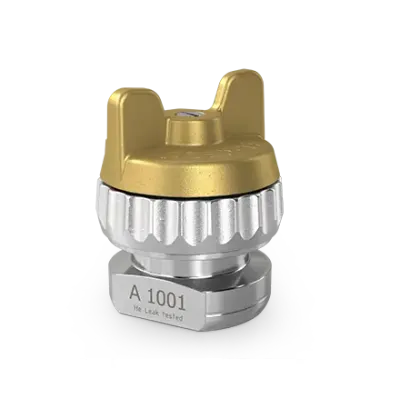
EL-CELL - Model PAT-Cell -The Ideal 3-Electrode Test Cell For High-Throughput Battery Testing.
Our electrochemical test cell for two- and three-electrode testing.
The PAT-Cell is a test cell for 2- and 3-electrode measurements on battery materials. It uses the modular PAT-Core concept and can therefore be used for a variety of test purposes. The cell has no wiring but is inserted directly into a PAT battery tester or connected to any commercially available battery tester / potentiostat via a PAT docking station. The easy handling is further improved by features such as the integrated PAT-Button. This patented*, electronic memory in the cell bottom enables automatic cell recognition when the cell is inserted into a PAT battery tester.
The PAT-Cell is equally suitable for automated high-thoughput scenarios and small-scale test series.
NEW! Lid seal highest long-term stability
With the reworked cell design, aluminium seals along with the new optional metal seal lid can now be used in addition to the proven polymer seals. This can make a difference in long-term measurements.
NEW! Glass-to-metal seals for improved temperature resistance
With the new GTM electrode feedthroughs, the PAT-Cell can now be operated and thermally cycled between -40 to +80° C. Up to 200°C with the PAT-Cell-HT.
NEW! Electronic cell ID (PAT-Button): The digital link between measurement data and test cell
When connected to a PAT battery tester, the PAT-Cell can now be identified by its electronic signature and automatically displayed in EL-Software. In this way, you always have an overview of your test cells. No need for paper and pencil anymore.
NEW! Superior corrosion resistance for next-generation
battery chemistries
Cell base made of stainless steel 1.4404 (316L) for compatibility with highly corrosive electrolytes.
NEW! Guaranteed tightness
All PAT-Cells are helium leak tested at the EL-Cell factory.
100% backwards compatibility
The improved PAT-Cell is fully backwards compatible to the previous cell version and can be used with all suited PAT-Core components and docking stations as normal.
Long term tests
The PAT-Core enables battery tests with a three-electrode setup of a duration of 1000 hours and more. The reason for this advantage is the new ring-shaped Li-reference electrode, which is far more time stable than point-type reference electrodes.
This makes the PAT-Core the perfect test system for aging studies.
Half-cell impedance spectra
The results of half-cell impedance spectroscopy reach a new level with the PAT-Cell. The ring-shaped Li-reference electrode allows half-cell impedance tests with minimal artifacts, due to the well-defined geometry of the insulation sleeve.
Easy electrolyte filling
The PAT-Cell can be filled easily with electrolyte during the assembly procedure. The user needs only an usual micro pipette for this purpose to drip a defined amount of electrolyte onto the separator, which is factory preinstalled in the insulation sleeve of the PAT-Core.
The amount of the electrolyte used is typically between 50 and 200 μL, depending on the thickness and porosity of the electrodes and separator used.
Increased productivity
The new PAT series boosts the productivity and quality of battery testing. Single-use components minimize the effort for cleaning and disassembling, and improve reproducibility. The docking concept prevents cable clutter and wiring errors, and saves space in the lab. All these features pave the way to high-throughput testing of battery materials.
Diameter: 49.5 mm
Height: 61 mm
Weight: 0.4 kg
Electrode diameter: 18 mm
Temperature resistance: -20 to 80° C