


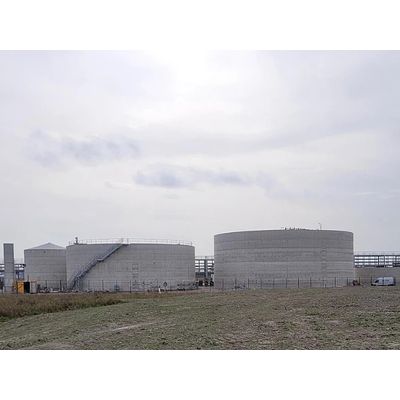
Waterleau BIOTIM - Anaerobic Digestion Wastewater Treatment Systems
Anaerobic digestion of wastewater is a biological wastewater treatment process used to treat sewage and industrial wastewater without the presence of oxygen. It`s a biological treatment method where microorganisms break down organic matter in the wastewater under anaerobic (oxygen-free) conditions. This process not only treats the wastewater but also produces biogas, a mixture of methane (CH4) and carbon dioxide (CO2), which can be used as a renewable energy source. This aspect makes anaerobic treatment an attractive option for industries looking to manage waste and generate energy simultaneously.
The process of anaerobic wastewater digestion, how does it work?
The complete anaerobic wastewater treatment process consists of 3 stages: pre-treatment, anaerobic digestion and post-treatment.
- Pre-treatment: Wastewater may undergo pre-treatment to remove inorganic solids, fats, oils, and greases that could hinder the anaerobic process.
- Anaerobic Digestion: The pre-treated wastewater is then moved to an anaerobic digester, a closed tank where the anaerobic microorganisms are housed. Here, the organic pollutants are metabolized by the microorganisms in the absence of oxygen, transforming them into biogas, water, and other byproducts.
- Post-treatment: The effluent from the anaerobic digestion process might still contain some pollutants and pathogens. Depending on the discharge standards or the intended use of the treated water, it may undergo further treatment processes such as aerobic treatment, filtration, or disinfection.
Wastewater undergoes pre-treatment to remove inorganic solids, fats, oils, and greases that could hinder the anaerobic process. This involves screening and grit removal to eliminate large debris and particles, followed by primary sedimentation to settle heavier solids. These steps ensure smoother operation and increased efficiency in the subsequent anaerobic digestion process.
Anaerobic DigestionIn the anaerobic digester, microbial processes proceed in 4 stages. The 4 stages consist of hydrolysis, acidogenesis, acetogenesis, and methanogenesis. Initially, during hydrolysis, complex organic compounds break down into simpler forms. These compounds then undergo acidogenesis, converting into volatile fatty acids, alcohols, hydrogen, and carbon dioxide.
Acetogenesis follows, further metabolizing volatile fatty acids and alcohols into acetic acid, hydrogen, and carbon dioxide. Finally, methanogenesis occurs, where methanogenic archaea transform acetic acid, hydrogen, and carbon dioxide into methane, the primary component of biogas, with carbon dioxide as a byproduct. This series of reactions efficiently converts organic pollutants into valuable energy resources and byproducts.
Post-treatmentAfter the anaerobic digestion process, the effluent may still contain pollutants and pathogens. To meet discharge standards or for intended reuse, further treatment is often required, such as biogas treatment. This may include aerobic treatment, filtration, or disinfection processes. These additional steps ensure that the treated water meets environmental regulations and is safe for discharge or reuse, completing the wastewater treatment cycle.
- Proven concept
- Integrated solution
- Continuous influent and effluent flow rate
- Constant water level
- Nutrient removal
- High quality effluent