


- Home
- Companies
- Internat Energy Solutions (IES)
- Services
- Carbon Assesments - Bilan Carbon ...
Carbon Assesments - Bilan Carbon Presentation Services
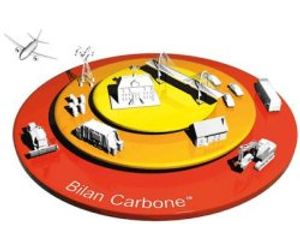
Bilan Carbone is an instrument and methodology with the two major functions of: Evaluating the amount of greenhouse gases (GHG) emitted by a structure (company, local government, territory...). Evaluating this structure`s dependence on fossil energies – in order to anticipate the economic and social impacts of increasing scarcity of such fuels. Therefore, the aim of the Bilan Carbone is not to decide who is responsible for GHG emissions, but who can act to reduce them. Besides, Bilan Carbone focuses exclusively on GHG emissions and their relationship to climate change. No other environmental externality is taken into account.
Bilan Carbone is a method for estimating GHG emissions originating from all kinds of business entities (services, industries, etc.) as well as government offices; after its latest update (v.6 – May 2009) it can now also assess the emissions of whole territories and local administrations.
Put simply, Bilan Carbone now exists in two broad versions:
- “Company – Administration – Organizations”
- “Local authorities”, split into two different modules:
- “Assets and Services”: to assess the structures under the local authority’s direct control, and thus allow it to assume an exemplary ‘eco-responsibility’;
- “Territory”: to assess the territory under the local authority’s influence field. This module is more specifically oriented towards general decision-making to fight climate change.
- Bilan Produit (assessment of the environmental impact of the products generated by a company, in order to launch an eco-design approach)
- Bilan Carbone Events (GHG assessment for events organization)
- Bilan Carbone Campus (GHG assessment for educational facilities)
- Dia’Terre (energy and GHG emissions diagnosis for farms)
- ClimaTerre (assessment of agricultural practices and agricultural production)